معرفی
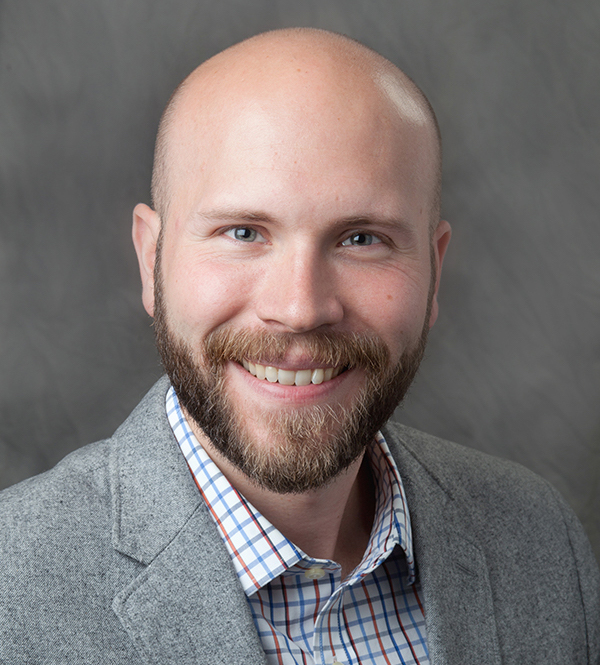
Georgios Perdikakis is an Assistant Professor in the Department of Physics at Central Michigan University, with an adjunct professor position at the National Superconducting Cyclotron Laboratory (NSCL) and Facility for Rare Isotope Beams (FRIB) at Michigan State University. His work bridges experimental nuclear physics and nuclear astrophysics, focusing on reactions that power stars and produce elements.
Education:
- Ph.D. in Nuclear Physics, National Technical University of Athens, Greece (2006)
- Masters in Applied Mathematical and Physical Sciences, National Technical University of Athens, Greece (2003)
- Degree in Physics, University of Ioannina, Greece (2000)
His research centers on nuclear astrophysics, particularly proton and neutron capture reactions in stellar environments, studied through transfer reactions using rare isotope beams at national facilities like FRIB. He leads the Perdikakis Lab at CMU, where his team develops advanced detection systems such as ionization chambers for heavy ions. His experimental work provides critical input for astrophysical models of energy production and nucleosynthesis.
The recent articles reflect a strong trend in experimental nuclear astrophysics, with emphasis on measuring reaction rates, developing instrumentation, analyzing transfer reactions, and simulating detection systems—all aimed at understanding stellar processes. These studies are conducted using rare isotope beams and advanced computational tools like FRESCO.
Scientific Awards:
- No awards explicitly mentioned in the text.
Dr. Perdikakis has advised students in nuclear physics research, though specific names are not listed. He has secured institutional support for instrumentation development at CMU but no external grants are detailed. His work is collaborative with major U.S. nuclear physics facilities, indicating active participation in large-scale scientific efforts.
Labs and Teams: He leads the Perdikakis Lab at Central Michigan University, focused on building experimental setups for nuclear astrophysics. He collaborates extensively with researchers at NSCL and FRIB, contributing to national rare isotope beam science.