معرفی
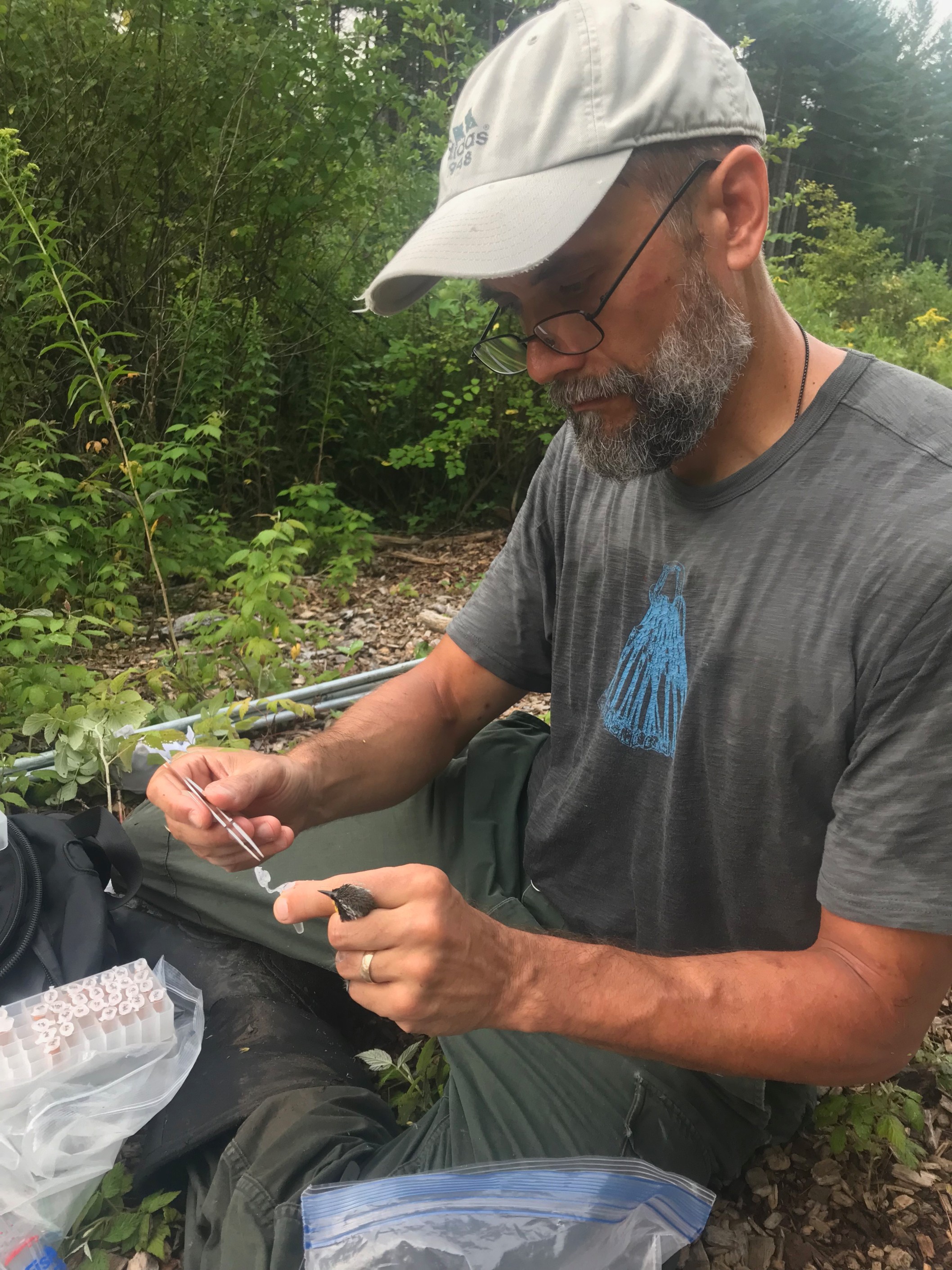
Geoffrey E. Hill is the William P. Molette Professor and Curator of Birds in the Department of Biological Sciences at Auburn University. He is a leading researcher in evolutionary biology, focusing on mitonuclear interactions, sexual selection, and avian coloration. His lab integrates molecular genetics, physiology, and ecology to understand the evolution of ornamentation and speciation.
Education:
- Ph.D., University of Michigan, 1991
- M.S., University of New Mexico, 1986
- B.S., Indiana University, 1983
Dr. Hill's research centers on how mitochondrial and nuclear gene interactions influence eukaryotic evolution. He investigates how mitonuclear compatibility affects female mate choice, carotenoid metabolism, and cellular respiration. His lab has been instrumental in uncovering the genetic basis of bird coloration, including the role of the SCARB1 and BCO2 genes. After a period focusing on speciation and copepods, the lab has returned to studying the environmental and genetic controls of carotenoid coloration in birds.
His recent publications reveal a strong trend in integrating molecular genetics with evolutionary theory, particularly in linking mitochondrial function to honest signaling in sexual selection. Work published in Nature Communications, Science, and PNAS highlights his lab's impact on understanding the mechanistic basis of ornamental traits and speciation.
Scientific Awards:
- Fellow of the American Association for the Advancement of Science (AAAS)
- NSF Graduate Research Fellowship Program (GFRP) – awarded to advisee Emma Rhodes, reflecting lab excellence
Dr. Hill advises graduate students and has mentored several who have secured postdoctoral positions, such as Matt Powers (Barreto Lab, Oregon State) and Nick Justyn (Allen Lab, Swansea University). His lab receives research funding enabling integrative studies across genetics, physiology, and evolution. He teaches Ornithology (BIOL5750) and co-teaches a graduate seminar on Mitonuclear Ecology and Sexual Selection (BIOL6750).
The Hill Lab is an active research group focused on the evolution of animal ornamentation from a mitonuclear perspective. Current work aims to unify theories of sex, sexual selection, and speciation under the umbrella of mitonuclear coadaptation. The lab recently refocused on bird coloration, promising new insights into the genetic and environmental regulation of carotenoid-based plumage.