معرفی
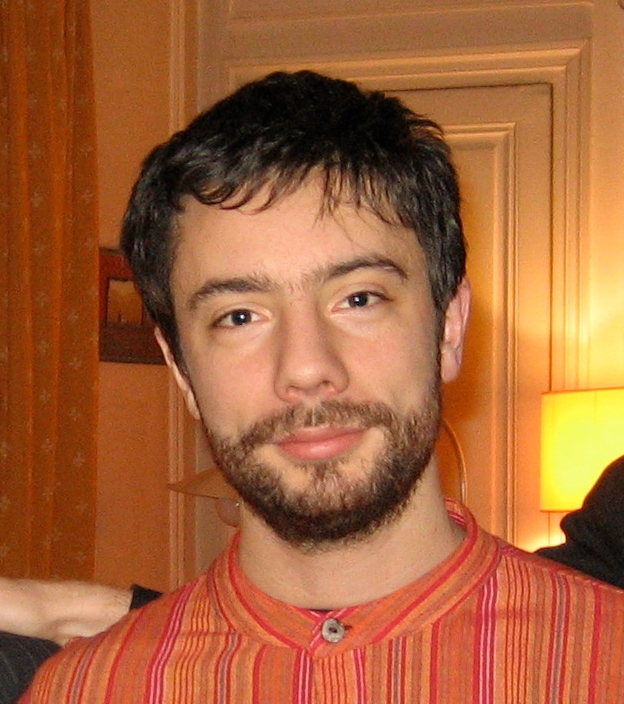
François Levrier is an Associate Professor in the Physics Department at École Normale Supérieure (ENS) Paris, where he conducts research on astrophysics with a focus on the interstellar medium, magnetic fields, and data analysis techniques. He is affiliated with the Laboratoire de Physique de l'ENS (LPENS) and has made significant contributions to the Planck collaboration as well as other major astrophysical projects.
His educational background includes:
- Graduate from ENS Paris (1996-2000)
- "Agrégé" in Physics (2000)
- Ph.D. in Astrophysics (2004)
- HDR in Astrophysics (2016)
Levrier's research focuses on the structure and dynamics of the interstellar medium, new techniques in radio-interferometry and astronomical data analysis, and databases and virtual observatory initiatives. His work particularly examines the relationship between magnetic fields and interstellar structures, using data from missions like Planck to study polarized dust emission and its implications for understanding the Galactic magnetic field. His recent research analyzes the statistical properties of interstellar turbulence and develops new methods for characterizing complex structures in observational data.
His research output shows a consistent focus on polarized submillimeter emission from thermal dust in turbulent, magnetized interstellar media, with applications to understanding cosmic microwave background foregrounds and the formation of molecular clouds. His work combines observational data with sophisticated statistical methods and simulations to extract physical insights from complex datasets.
Among his notable achievements are:
- Leading the "Planck 2018 results. XII. Galactic astrophysics using polarized dust emission" paper
- Co-leading the MIST project (2017-2022), which received a 2.5 M€ Advanced Grant from the European Research Council
- Coordinating the BxB project, funded by the Agence Nationale de la Recherche with 500 k€
- Developing the S3-Tools for astronomical data analysis
Levrier actively supervises PhD and Master's students, with current projects focusing on polarized CMB foregrounds and primordial B-modes in CMB data. He has secured significant research funding through competitive grants and collaborates extensively with international research teams. He is also involved in the ORION-B project, which has conducted comprehensive observations of the Orion B Giant Molecular Cloud, creating one of the most detailed radio-domain datasets of this region.