معرفی
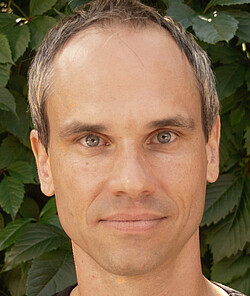
Frank Pennekamp is an independent group leader at the Department of Evolutionary Biology and Environmental Studies, Faculty of Science, University of Zurich, Switzerland. He leads the "Biotic responses to environmental change" research group, focusing on understanding how populations and communities respond to global change through the integration of experiments and theory using model systems (microorganisms, dung-dwelling insects), and mathematical and statistical modeling.
His educational background includes a PhD in Ecology (2014) from Université catholique de Louvain, Belgium, with thesis titled "Swimming with ciliates: dispersal and movement ecology of Tetrahymena thermophila" supervised by Prof. Nicolas Schtickzelle, and a Diploma in Applied Biogeography (2009) from University of Trier, Germany, focusing on the Spanish Fritillary butterfly.
Dr. Pennekamp's research centers on movement ecology, dispersal strategies, community dynamics, phenotypic plasticity, and biodiversity responses to environmental change. His work bridges experimental ecology with theoretical modeling to understand ecological predictability and stability under changing conditions. Recent work has examined how biodiversity affects ecosystem stability, forecasting ecological dynamics, and the mechanisms underlying species responses to multiple stressors.
His publication record shows a consistent focus on ecological dynamics, with recent work emphasizing biodiversity-stability relationships, ecological forecasting, and the effects of multiple environmental stressors across organizational levels. His research employs both microbial experimental systems and theoretical approaches to address fundamental questions in ecology.
Dr. Pennekamp has supervised Master's students including Divina and Til, who recently completed their theses. His research group continues to actively investigate biotic responses to environmental change through multiple approaches including experimental work, theoretical modeling, and analysis of large-scale ecological time series.