معرفی
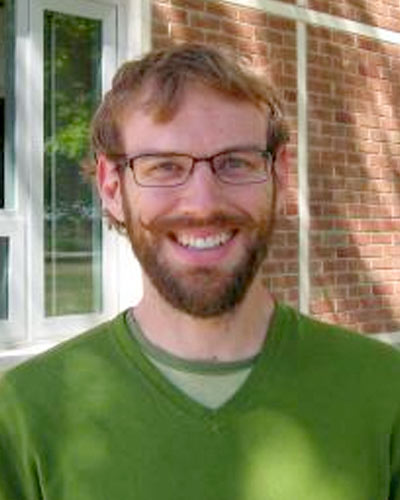
Francesco Mezzadri is a Professor of Mathematical Physics in the School of Mathematics at the University of Bristol. His research focuses on Random Matrix Theory and its applications across various fields of physics and mathematics.
His educational background includes a Laurea from Parma and a Ph.D. from Bristol. His research interests span multiple disciplines:
- Random Matrix Theory
- Quantum Chaos
- Statistical Mechanics
- Quantum Transport
- Non-Hermitian Random Matrices
- Two-Dimensional One Component Plasma
Professor Mezzadri's work demonstrates how Random Matrix Theory provides powerful mathematical frameworks for understanding complex systems across diverse fields. His research shows remarkable versatility, connecting abstract mathematical concepts with practical applications in quantum physics, statistical mechanics, and machine learning. He has made significant contributions to understanding the statistical properties of systems where detailed mathematical descriptions are either unknown or too complicated for conventional approaches.
His research output shows a clear evolution from foundational work in quantum chaos and spectral statistics to more recent applications in machine learning and neural networks, demonstrating the expanding relevance of Random Matrix Theory across scientific disciplines.
Scientific awards:
- London Mathematical Society Fröhlich Prize (2018)
Professor Mezzadri has supervised doctoral research and has been principal investigator on multiple research projects, including "Wegner estimates and universality for non-Hermitian matrices" (2014-2017), "UNIVERSALITY IN NON-HERMITIAN MATRIX MODELS" (2009-2013), and "PHASE TRANSITIONS IN TWO DIMENSIONAL" (2006-2009). His work has received significant attention, with multiple publications garnering citations and downloads as indicated in the research output metrics.
His research connects to various interdisciplinary areas, particularly the application of Random Matrix Theory to understand complex systems in quantum physics, statistical mechanics, and machine learning architectures.