معرفی
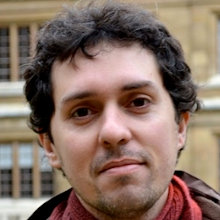
Francesco Crifò is an Associate Professor in the Department of Humanities (DIPSUM) at the University of Salerno, where he maintains an active research profile in Italian philology, historical linguistics, and etymology. His academic work focuses on Romance languages with particular attention to Venetian dialect studies, Latin and Greek influences on Italian, and historical lexicography.
Crifò's research interests span several interconnected domains including the study of learned and semi-learned borrowings from Latin, the evolution of Venetian linguistic structures, the etymology of specialized vocabularies (particularly military and medical terminology), and Mediterranean linguistic contacts. His work often bridges historical philology with contemporary lexicographical practices, examining how language evolves through cultural exchange and historical documentation.
Analysis of his recent publications reveals a consistent focus on etymological methodology, particularly in the context of the Lessico Etimologico Italiano project, with significant contributions to understanding how Latin vocabulary entered Italian through both popular and scholarly channels. His research demonstrates expertise in manuscript studies, with particular attention to 15th-16th century Venetian texts, and shows a sophisticated approach to distinguishing between different transmission paths of lexical items across Romance languages.
Crifò is actively involved in multiple major international lexicographical projects including the Lessico Etimologico Italiano (since 2008, as editor of F-), Deonomasticon Italicum (since 2009, as co-editor since 2015), Dictionnaire Étymologique Roman (since 2009, as reviser for Italoromania), and Thesaurus Linguae Latinae (since 2010, as co-author of the Romanica).
His methodological approach combines traditional philological analysis with modern lexicographical techniques, examining linguistic phenomena through multiple lenses including phonological evolution, morphological adaptation, semantic shift, and sociocultural context. Recent work shows particular interest in the documentation of regional variations and the historical development of specialized vocabularies across different domains of knowledge.