معرفی
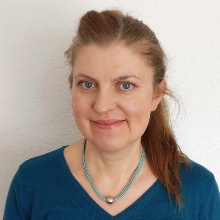
Fereshteh Modarresi is a Senior Researcher at Humboldt University of Berlin specializing in theoretical and experimental linguistics, with primary focus on semantics and syntax of Persian and German languages. She is actively involved in the DFG-funded project ANAPIN (Anaphoric potential of incorporated nominal and weak definitions) under Research Area 3 'Syntax & Lexicon', collaborating extensively with Professor Manfred Krifka. Her academic work bridges cross-linguistic analysis with empirical methodologies.
Her research centers on semantic-syntactic interfaces, particularly investigating anaphora, noun incorporation, weak definites, bare nouns, and generic sentences. She examines how these phenomena manifest in Persian (a differential object marking language) compared to German, revealing universal constraints and language-specific patterns. Recent work explores similative plurals, durative markers, and assertion modifiers through both theoretical frameworks and experimental designs, demonstrating how morphosyntactic structures interact with discourse interpretation and pragmatic inference.
Analysis of her 2021-2024 publications reveals three dominant trends: (1) systematic comparison of anaphoric potential across nominal types (weak definites, bare nouns, incorporated nominals), (2) experimental validation of semantic theories using Persian-German contrasts, and (3) investigation of homogeneity effects in plural interpretations. Her work increasingly integrates psycholinguistic methods, as seen in studies on trustworthiness markers and number agreement phenomena, pushing the boundaries of formal semantics with empirical evidence.
Scientific Awards: No awards documented in provided materials.
Advising and Grants: No student supervision details or grant information appears in available records. Her research is primarily conducted within the DFG ANAPIN project framework.
Research Infrastructure: Modarresi operates within Humboldt University's linguistics ecosystem as part of the DFG project ANAPIN team. Her work leverages experimental labs for psycholinguistic testing and maintains strong connections with international Iranian linguistics networks, evidenced by frequent presentations at NACIL conferences. Collaboration with Krifka's research group provides access to theoretical frameworks in formal semantics and cross-linguistic databases.