
معرفی
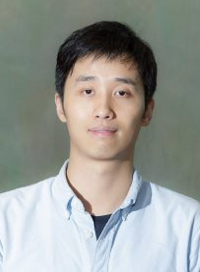
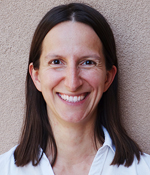
Fei Dai is an astronomer specializing in exoplanet research. He is currently a faculty member at the University of Hawaiʻi, having started his position in February 2024 after previously serving as a NASA Sagan Fellow at Caltech. His research focuses on understanding the formation, evolution, and habitability of planetary systems, with particular emphasis on extreme planetary systems including ultra-short-period planets, super-puffs, resonant chains, and misaligned planetary systems.
Dr. Dai earned his PhD in Physics from MIT under the supervision of Prof. Josh Winn. His work combines novel data analysis techniques and numerical simulations to address fundamental questions in exoplanet science. He is actively involved in major projects including leading the Stellar Obliquity Program for the Keck Planet Finder (KPF).
His research spans multiple critical areas: stellar obliquity measurements to understand planetary system formation channels; ultra-short-period planets to constrain composition and formation mechanisms; super-puff planets to explain their puzzling low densities; resonant planetary chains to test disk migration theories; and photoevaporation processes that shape the radius distribution of small planets. His work has demonstrated that photoevaporation rather than core-powered mass loss is the main driver for the observed radius gap in exoplanet populations.
Dr. Dai's research reveals important trends across his publications: a consistent focus on extreme planetary systems that challenge conventional theories, innovative methodologies like Transit Chord Correlation for measuring stellar obliquity, and the integration of observational data with hydrodynamic simulations. His work often bridges theoretical predictions with observational constraints from missions like Kepler, K2, and TESS.
- NASA Sagan Fellow
- Over 2500 citations
- h-index of 31
- First-author on 13 publications
Dr. Dai actively mentors students and postdocs, seeking new collaborators for his research at the University of Hawaiʻi. His laboratory combines computational work in data analysis and simulations with observational components using major facilities including the Keck Observatory. Future work will focus on expanding stellar obliquity measurements to younger planetary systems discovered by TESS, providing crucial constraints on planet formation theories.
Fei Dai در سایتهای دیگر
جستوجوهای مرتبط
شاید اینها هم برایتان مناسب باشند
 Andrew W. HowardCalifornia Institute of Technology (Caltech) · استاد
 Steven GiacaloneCalifornia Institute of Technology (Caltech) · دانشیار مهمان
 Sarah MillhollandMassachusetts Institute of Technology · استادیار
 Lauren WeissUniversity of Notre Dame · استادیار
 Luke BoumaCalifornia Institute of Technology (Caltech) · پژوهشگر
 Diana DragomirUniversity of New Mexico · استادیار