معرفی
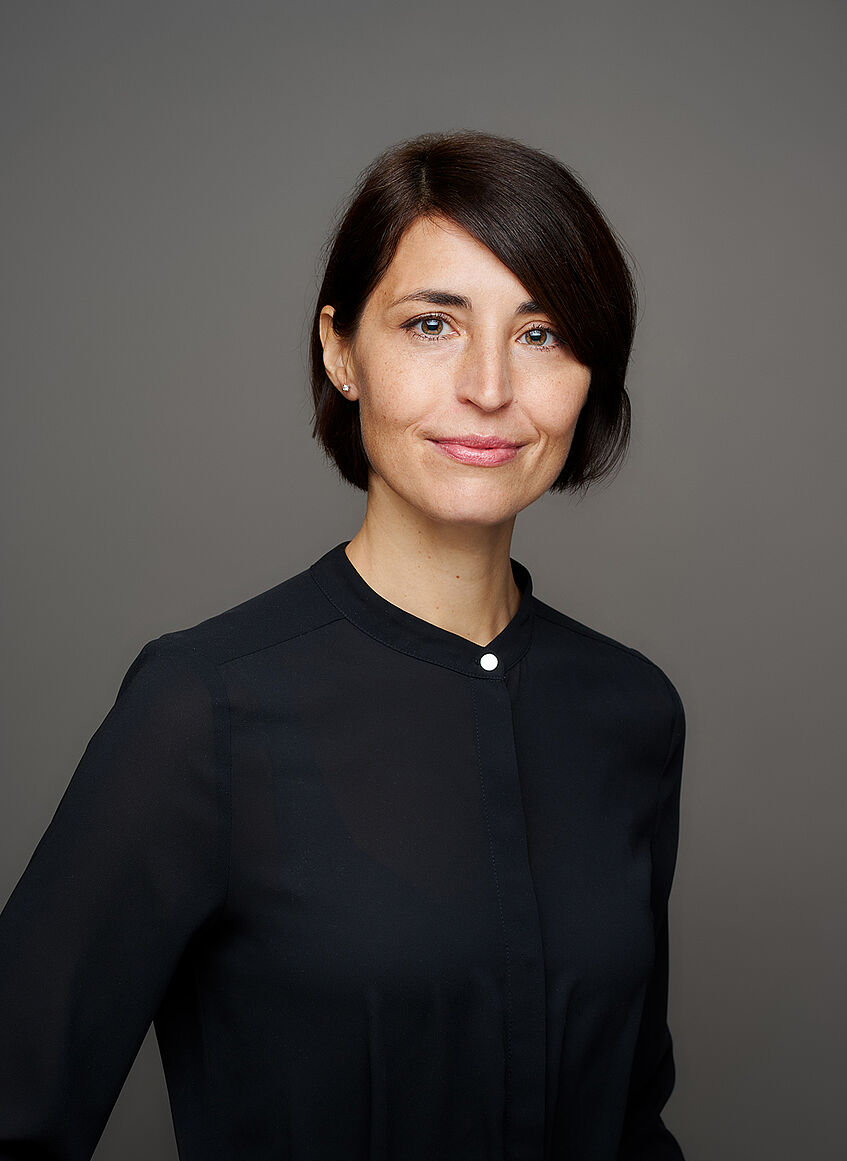
Prof. Dr. Eva Specker is a faculty member at the Institute of Media and Communication, University of Tübingen, where she joined as a professor on April 1, 2025. She leads the Aesthetics and Learning Lab (ALL), focusing on how aesthetic experiences contribute to learning, especially in informal settings like museums. Her interdisciplinary work bridges psychology, art, and education.
Education:
- Bachelor of Science in Psychology, University of Amsterdam (2014)
- Research Master in Psychology, University of Amsterdam (2016), with minors in museum studies, art history, and art studies
- PhD in Psychology, University of Vienna (2019), interdisciplinary project with art historians
- Habilitation, University of Vienna (2025)
Her research explores the cognitive and emotional dimensions of aesthetic engagement, particularly sense-making, experience-based learning, epistemic emotions, and memory. Using methodologies such as eye-tracking and virtual reality, her lab bridges experimental and real-world contexts. Although no specific publications are listed in the provided text, her work is grounded in empirical aesthetics and psychological science, with a strong focus on translational impact in educational and cultural institutions.
Scientific Awards and Recognitions:
- Leader of an FWF-funded research group (2022–2025)
- Board member, International Association of Empirical Aesthetics (IAEA) since 2022
- Associate Editor, Psychology of Aesthetics, Creativity, and the Arts (since 2022); previously student editorial board member (2018–2022)
Prof. Specker advises doctoral candidates and postdocs through the IWM’s young talent promotion programs. While specific grants beyond the FWF project are not detailed, her leadership of a competitively funded research group indicates a strong record of grant acquisition. She mentors emerging scholars in empirical aesthetics and interdisciplinary research.
She leads the Aesthetics and Learning Lab (ALL), which employs a multimodal, ecologically valid approach to studying how people learn through art and aesthetic experiences. The lab emphasizes transferring findings from controlled experiments to real-life museum and informal learning environments, using tools such as VR and eye-tracking to study perception, cognition, and emotion in context.