معرفی
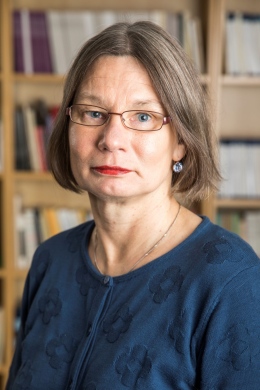
Eva Edman Stålbrandt is a Senior Lecturer at the Department of Education, Faculty of Social Sciences, Stockholm University. She teaches across both basic and advanced education programs and serves as project-leader for the digital learning team at the Centre for the Advancement of University Teaching, specializing in assessment methodologies.
Her research interests focus on transitions from higher education to workplace, teacher education, digital assessment, mentoring practices, and teachers' professional induction. She is an active member of the Educational Research in Citizenship Competences (ERiCC) research group, which examines how competence develops through reflection, anticipation, and action to strengthen pluralistic democracy. Dr. Stålbrandt also participates in the National Seminar for Cultural Historical Studies, connecting her work to broader theoretical frameworks in education.
Analysis of her recent publications reveals a consistent emphasis on authentic learning approaches and their impact on graduate employability. Her work demonstrates how educational practices can bridge the gap between academic preparation and workplace demands, with particular attention to developing students' creative thinking, teamwork, communication, and analytical skills through realistic learning scenarios.
Dr. Stålbrandt actively contributes to the academic community as a reviewer for ECER in the network of ICT in Education and Training and for Comunicar – Media Education Research Journal. She has supervised numerous undergraduate students and currently serves as second supervisor for one doctoral student, demonstrating her commitment to academic mentorship.
She maintains international research collaborations through ERASMUS partnerships with Universidad Oberta de Catalunya and Las Palmas University de Gran Canaria. From 2016-2019, she participated in the Erasmus+ project 'Matching graduates' skills and labour world demands through authentic learning scenarios' (Skill Up), investigating how authentic learning experiences better prepare graduates for professional environments.