معرفی
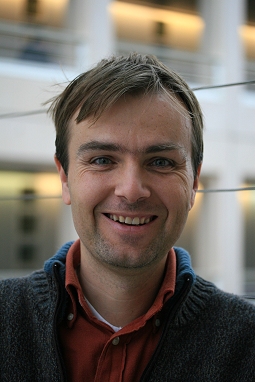
Eric D. Widmer is a Professor in the Department of Sociology at the University of Geneva, where he conducts research on family and personal configurations, life course trajectories, and social networks. He is a member of I-DEMO and affiliated with the Swiss National Center of Competence in Research LIVES. Widmer developed the Family Network Method (FNM) and applies a configurational perspective influenced by Norbert Elias to study evolving family structures.
- University of Geneva – Department of Sociology
- Member, I-DEMO
- Affiliated with LIVES – Swiss Center of Expertise in Life Course Research
- Former Visiting Researcher, Research Group Demography and Inequality (2014)
His research focuses on family diversity, gendered life courses, and methodological innovations such as multichannel sequence analysis. He investigates how family configurations evolve across the life course, how they relate to health and social capital, and how spatial dispersion is shaped by inclusiveness. His work emphasizes the historical and structural nature of family interdependencies.
The most recent publications highlight trends in family ambivalence, conflict structures in older adults’ networks, spatial dispersion, and misleading social norms affecting life trajectories. His methodological contributions include optimizing sequence analysis techniques by borrowing from bioinformatics, enhancing the robustness of life course typologies.
Scientific contributions include:
- Development of the Family Network Method (FNM)
- Advancement of configurational theory in family sociology
- Innovations in multichannel sequence analysis
- Typologies of male and female life trajectories
- Analysis of vulnerability and social norms across the life course
Widmer has supervised and collaborated with numerous researchers across Europe, contributing to major publications and collective volumes. His work is supported by Swiss and European research networks. He has not disclosed specific grants, but his involvement with LIVES and the Swiss Household Panel indicates institutional funding.
He is actively involved in research teams focusing on life course analysis, family configurations, and mental health trajectories. His lab-like collaborations include the Pavie group and interdisciplinary teams with bioinformaticians and statisticians, emphasizing methodological rigor and theoretical innovation.
حوزههای پژوهشی