معرفی
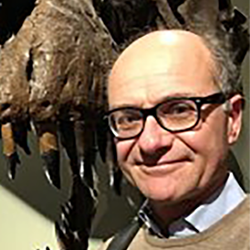
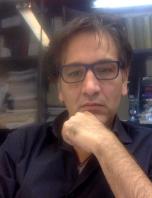
Erasmo Mancusi is an Associate Professor in the Department of Engineering (DING) at the University of Sannio, specializing in chemical engineering with a focus on nonlinear dynamics, mathematical modeling, and process control. He holds the position of "Professore Associato" and works in the field of "ING-IND/26 - Teoria dello Sviluppo dei Processi Chimici" (Theory of Chemical Process Development).
Dr. Mancusi was born in Salerno, Italy on August 22, 1971. He graduated in Chemical Engineering cum laude in 1997 from the University Federico II of Naples with a thesis entitled: "Bifurcational analysis of NOx reduction on a Platinum network" and obtained his PhD from the same University in 2000 with a dissertation on "Non linear analysis of a fixed bed reactor for the ammonia synthesis." Since 2002 he has been a tenured faculty member at the University of Sannio, Department of Engineering.
His research focuses on methodological aspects of nonlinear dynamics, modeling, simulation, and process control applied to chemical and energy engineering. Current research lines include nonlinear analysis of various reactor types, development of numerical methods for bifurcation analysis, dynamical analysis of periodically forced chemical reactors, and applications in VOC abatement, methanol synthesis, and fuel cell technology. He maintains active collaborations with colleagues at the University Federico II of Naples and the University of Salerno. Notably, he is currently serving as a visiting professor at Universidade Federal de Santa Catarina in Brazil.
Dr. Mancusi has authored over 80 papers published in international journals and conference proceedings. His recent work (2023-2025) shows a strong focus on methanation processes, CO2 utilization, chemical looping combustion, and reactor modeling, with particular emphasis on sorption-enhanced methanation systems, biogas upgrading technologies, and integrated carbon capture and utilization processes.
He teaches three courses at the University of Sannio: Chemical Reactor Models, Dynamics and Control of Energetic Processes, and Laboratory of Numerical Methods with MATLAB. His research has a strongly multidisciplinary character at the intersection of chemical engineering, mathematics, and computational science, with significant implications for sustainable energy production and carbon management.