معرفی
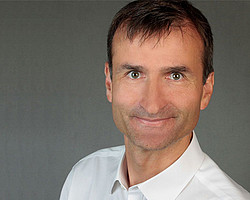
Prof. Dr. Enno Bahrs is Head of the Department of Agricultural Business Management (410b) at the University of Hohenheim, Germany, where he has held a full professorship since 2008. His work is based at the Institute of Agricultural Business Management, and he plays a leading role in shaping sustainable agricultural systems through interdisciplinary research and policy engagement.
His research interests lie at the intersection of agricultural economics, sustainability, and digital innovation in farming. Key areas include:
- Sustainable biomass production and agro-ecological transitions
- Climate resilience and adaptation strategies in agriculture
- Development of GIS-based tools for sustainability assessment
- Decision support systems (DSS) for farm-level climate risk management
- Innovations in pasture and grassland management
- Policy analysis in plant protection, biodiversity, and bioeconomy
Although no specific publications are listed in the provided text, his involvement in multiple large-scale, interdisciplinary research projects indicates a strong and ongoing publication record in agricultural economics, environmental modeling, and sustainable land use. These projects often combine economic analysis with ecological and technological innovations.
Prof. Bahrs holds several prestigious roles that reflect his scientific leadership:
- Scientific Advisory Board for Biodiversity and Genetic Resources at the BMEL
- Co-editor of the German Journal of Agricultural Economics
- Steering committee member of the research program 'Bioeconomy Baden-Württemberg'
- Member of the Senate of the University of Hohenheim
- Chairman of the DMK eV (German Corn Committee)
- Scientific Advisory Board of the National Action Plan for Plant Protection at the BMEL
He has led and contributed to significant research grants and collaborative projects including NOcsPS 2.0, NBiomassBW, StressRes, KaRisMa, and GreenGrass 2.0—funded by agencies such as BMBF and BMEL. These projects involve partnerships with institutions like the Julius Kühn Institute and Georg-August University of Göttingen, demonstrating strong national collaboration. He supervises bachelor's and master's theses, following formal guidelines, though no specific students are named. His team operates within a well-structured research environment focused on translating scientific findings into practical tools for farmers, advisors, and policymakers.
His research group is deeply engaged in developing integrative models and web-based tools that assess sustainability at multiple scales (field, farm, regional), support real-time monitoring of environmental stressors, and enable climate adaptation planning. Projects like GreenGrass 2.0 aim to restore ecological balance through innovative grazing systems, while others focus on pesticide-free agriculture and mineral fertilizer optimization.