معرفی
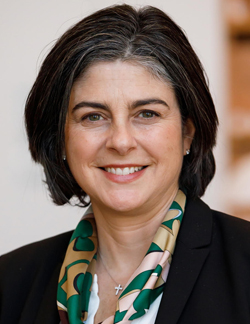
Elizabeth R. Kirk is an Assistant Professor of Law and Co-Director of the Center for Law and the Human Person at the Columbus School of Law, Catholic University of America. Her scholarship integrates Catholic social thought with legal analysis, focusing on family law, reproductive ethics, and human dignity in contemporary jurisprudence.
Her educational background includes:
- J.D., Notre Dame Law School, 1996
- B.A. in English Literature, University of Missouri, 1993
- Graduate studies in theology
Professor Kirk's research centers on Thomistic philosophy applied to modern legal challenges, particularly parental rights, adoption as a positive alternative in reproductive decision-making, and the ethical implications of reproductive technologies. She examines how Catholic intellectual tradition informs debates on abortion jurisprudence, child welfare systems, and the role of faith-based organizations in social services, emphasizing the inherent dignity of all human life from conception.
Her recent publications demonstrate consistent focus on adoption advocacy and critique of abortion frameworks, with increasing engagement in post-Dobbs reproductive policy analysis. Key trends include reframing adoption as a 'gift exchange,' challenging legal incoherence in parental rights doctrines, and analyzing judicial interpretations of human personhood in embryonic contexts.
Professor Kirk actively mentors through co-authorship with practitioners like Ryan Hanlon of the National Council For Adoption and participates in policy discussions at forums such as the AALS Annual Meeting. She has secured collaborative opportunities through organizations including the Institute for Family Studies and Public Discourse.
As Co-Director of the Center for Law and the Human Person, she leads initiatives connecting Catholic social teaching with legal education. She co-founded the Vita Institute for pro-life movement leadership training and serves on boards including the Fellowship for Catholic Scholars and Springs in the Desert, extending her influence beyond academia into practical advocacy spaces.