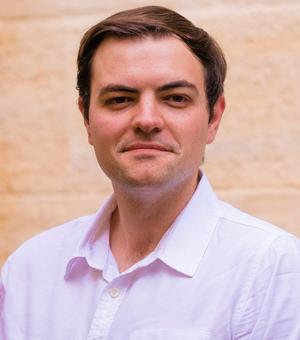
معرفی
Dr. Elizabeth Greene is an Associate Professor of Classics at the University of Western Ontario, where she has held a position since July 2016. She holds the prestigious Canada Research Chair in Roman Archaeology and leads groundbreaking research at the Vindolanda Roman fort site near Hadrian's Wall in northern England. Her academic journey culminated with a PhD from the University of North Carolina, Chapel Hill in 2011.
Greene's research focuses on the social dimensions of Roman military life, particularly through the lens of everyday material culture. She has pioneered the study of leather footwear from Vindolanda, using these artifacts to reconstruct the lives of women, children, and families within Roman military communities. Her work challenges traditional narratives that have marginalized non-combatants in Roman frontier societies, revealing a complex social ecosystem where military personnel, their families, and associated civilians coexisted within and around forts. Her innovative approach combines archaeological analysis with historical context to illuminate how conquest affected daily life beyond the battlefield.
Greene's scholarly output demonstrates a consistent trajectory toward increasingly sophisticated methodologies for analyzing ancient material culture. Her recent work incorporates cutting-edge 3D imaging techniques to detect foot impressions invisible to the naked eye, while her research on podiatric modifications to Roman footwear reveals sophisticated medical knowledge. These studies collectively demonstrate how material culture can serve as a powerful proxy for understanding social structures, health outcomes, and identity markers in ancient societies.
- Canada Research Chair in Roman Archaeology
- Best Poster Award at Archaeological Institute of America Conference
As a dedicated mentor, Greene supervises graduate students working on innovative aspects of Roman material culture. Maria Glanfield employs 3D structured light scanning to detect foot impressions in preserved leather footwear, while Casey Boettinger investigates historical health outcomes through podiatric interventions visible in shoe modifications. Her research has been supported by significant grants, including funding for advanced imaging technologies that enable new forms of analysis on the Vindolanda leather collection.
Greene works closely with the Vindolanda Archaeological Leather Project and maintains international collaborations, notably with physical anthropologist Trudy Buck at Durham University. Her research team combines expertise in archaeology, physical anthropology, and digital imaging to extract maximum information from the unparalleled Vindolanda leather assemblage, which includes approximately 7,400 leather objects, making it the largest such collection from a single Roman site.