معرفی
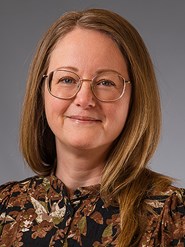
Elin Lövestam is Professor at Uppsala University's Department of Food Studies, Nutrition and Dietetics, where she serves as Director of Doctoral Studies. Since 2016, she has led the INIS (International Nutrition Care Process Implementation Survey), an international initiative involving researchers from 23 countries examining standardized nutrition care frameworks. Commencing in 2023, she coordinates the InSyNC doctoral program, a collaboration between Uppsala, Umeå, and Gothenburg Universities.
Her research focuses on clinical nutrition, dietetics practice, and implementation science. Key areas include developing person-centered tools for evaluating dietetic interventions in malnutrition, ethical dimensions of dietary counseling in primary care, and the social impact of chemosensory dysfunctions post-COVID-19. She pioneers critical approaches to dietetics through projects like ETHICARE, examining value conflicts in nutritional care. Her work bridges clinical practice with social sciences, particularly in analyzing how standardized terminology affects patient-centered care.
Analysis of her recent publications reveals three dominant research trajectories: (1) Implementation challenges of the Nutrition Care Process globally, (2) Ethical dilemmas in oral nutritional supplement prescription, particularly regarding resource allocation and patient autonomy, and (3) Social consequences of chemosensory disorders, highlighting how smell/taste dysfunction disrupts food-related social practices. Her methodological approach combines qualitative methods with implementation science frameworks, often employing international comparative designs.
Lövestam actively shapes doctoral education through the InSyNC program while directing the department's doctoral studies. Her leadership extends to the ETHICARE project addressing ethical challenges in primary care dietary advice. She collaborates extensively through the INIS network, fostering cross-national research on dietetics practice standards.
Her scholarly contributions demonstrate consistent leadership in advancing nutrition care standardization while critically examining its ethical and social dimensions. Current work emphasizes patient perspectives in malnutrition management and the social ramifications of sensory dietary disruptions.