معرفی
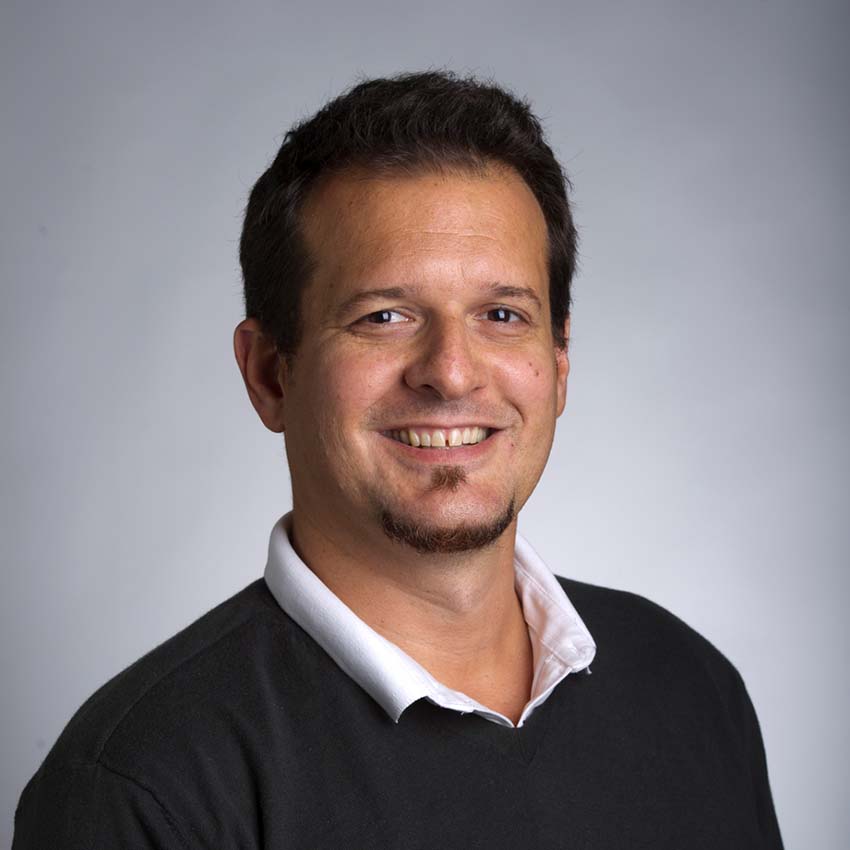
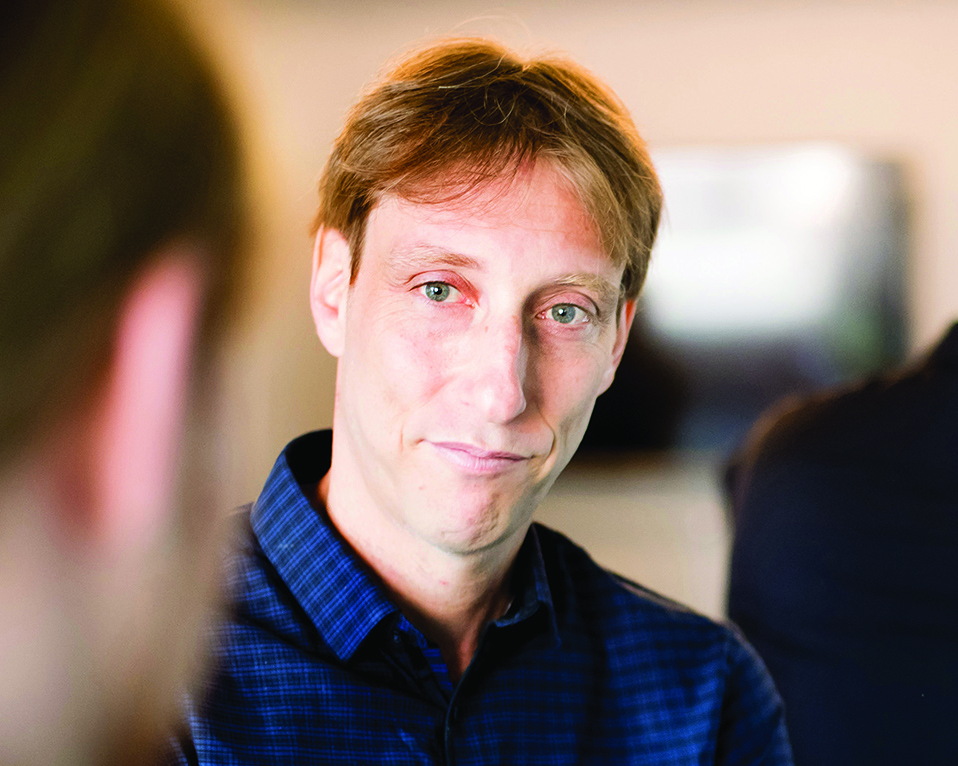
Professor Ehud Altman is a faculty member in the Physics Department at the University of California, Berkeley, where he joined as a full professor in summer 2016 after serving as a Miller visiting professor during 2012-2013. Previously, he was an Associate Professor at the Weizmann Institute of Science (2005-2016), starting as a Yigal Alon fellow in 2005.
His educational background includes:
- Ph.D. from Technion, Haifa (2002)
- Postdoctoral fellowship at Harvard University (2002-2005)
Altman's research centers on quantum matter where interactions and entanglement produce emergent properties, with particular focus on non-equilibrium systems. His group employs field theory, strong disorder renormalization group, tensor networks, and quantum Monte Carlo simulations to investigate many-body localization, thermalization, driven quantum systems, and topological states in ultra-cold atomic matter. He maintains close collaborations with experimental groups studying quantum phenomena in cold atom platforms.
His publication record reveals consistent contributions to many-body localization theory, topological quantum phases, and non-equilibrium dynamics, with significant work concentrated between 2004-2016. Key themes include disorder-driven quantum phase transitions, hidden order in low-dimensional systems, and emergent behavior in driven-dissipative condensates.
Scientific recognition includes:
- Yigal Alon fellow (2005)
- Miller visiting professorship at UC Berkeley (2012-2013)
- Young investigator prize from Israel Physical Society (2010)
- Krill prize of Wolf foundation (2010)
As leader of Ehud Altman's Group at Berkeley, he directs theoretical research supported by collaborations with experimental teams investigating quantum many-body phenomena. His work bridges condensed matter theory, quantum information, and atomic physics through development of novel analytical and numerical approaches to non-equilibrium quantum systems.
The research laboratory focuses on fundamental questions in quantum statistical mechanics, with current projects examining thermalization boundaries in isolated systems, topological order in driven settings, and emergent properties of strongly correlated quantum matter using both analytical techniques and computational simulations.