معرفی
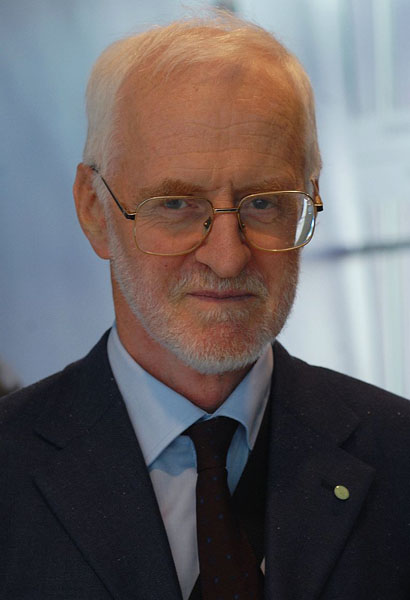
Egon Boerger is a Professor of Computer Science at the Department of Computer Science, University of Pisa since November 1985. He previously held professorial positions at the University of Udine (1982/83), University of Dortmund (1978-1985), and University of Salerno (1972-1976), with extensive guest researcher appointments at IBM, Microsoft Research, ETH Zürich, Siemens, and other leading institutions through 2017.
- Doctorate: Mathematics Department, University of Münster (1971)
- Habilitation: University of Münster (1976)
Boerger's research career spans two distinct phases: from 1969-1989 he pioneered applications of logic in computer science, co-founding the European Association for Computer Science Logic (EACSL) and serving as its first president (1992-1997). Since 1990, he has focused on Software Technology through the development of the Abstract State Machines (ASM) method for rigorous system design, bridging theoretical foundations with industrial applications in programming languages, system architectures, and software engineering. His approach emphasizes mathematically verified stepwise refinement from abstract models to executable code.
- Humboldt Research Award (2007/08)
- Member of Academia Europaea (2010)
- Festschrift: Rigorous Methods for Software Construction and Analysis (Springer LNCS 5115, 2009)
As co-founder of three major conference series (CSL, ASM, and ABZ), Boerger has organized over 30 international conferences and workshops while supervising numerous PhD students. His research has been implemented through industrial collaborations with IBM, Siemens, Microsoft, and SAP, resulting in practical applications across hardware/software systems. He maintains active academic engagement through guest professorships at institutions including ETH Zürich, KIT Karlsruhe, and SCCH Linz.
Boerger's academic legacy includes co-authoring two logic monographs (including the influential 'Computability, Complexity, Logic'), three computer science monographs, two textbooks, and 'The Classical Decision Problem'. His work on Abstract State Machines has established a formal framework for controllable system development that continues to influence both theoretical and applied computer science.