معرفی
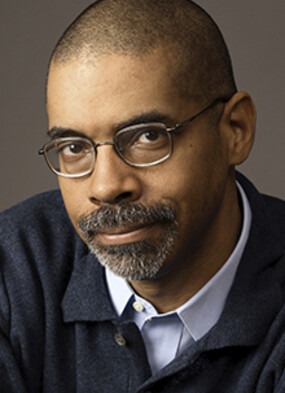
Ed Carter is a Professor of Communications at Brigham Young University's School of Communications, where he holds a full-time faculty position. Previously serving as Director of the School of Communication and Associate Dean in the College of Fine Arts and Communication, he combines expertise as an attorney, journalist, and academic specializing in communications law and copyright law within international human rights frameworks.
His educational background includes:
- Master of Studies in International Human Rights Law, University of Oxford (2016)
- LL.M. in Intellectual Property (with distinction), University of Edinburgh School of Law (2009)
- Juris Doctor, magna cum laude, J. Reuben Clark Law School, Brigham Young University (2003)
- Master's degree, Medill School of Journalism, Northwestern University
- Bachelor's degree in Communications, Brigham Young University
Professor Carter's research critically examines legal protections for journalists globally, addressing threats to press freedom, defamation standards, and journalism's role as a public good in democratic societies. His work bridges theoretical legal concepts with practical implications for media sustainability and human rights advocacy, particularly through nonprofit news models and international legal frameworks.
Analysis of his publications reveals consistent focus on transitional justice mechanisms for journalist safety, the application of ICCPR Article 19 to source protection, and comparative studies of defamation standards across international courts. His scholarship increasingly addresses digital-era challenges like the 'right to be forgotten' and nonprofit media sustainability.
Prior to academia, Carter worked four years as a daily newspaper reporter, clerked for Judge Ruggero J. Aldisert of the U.S. Court of Appeals for the Third Circuit, and maintains a part-time appellate litigation practice. He has also contributed freelance reporting to regional magazines.
As a professor, Carter advises graduate students in the School of Communications though specific advisee names are not provided. No scientific awards are listed in the available documentation.