معرفی
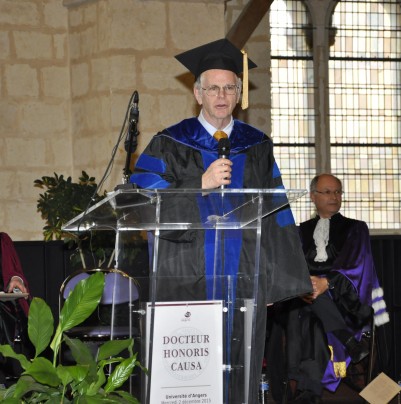
Douglas C. Wallace, PhD, serves as Director of the Center for Mitochondrial and Epigenomic Medicine at Children's Hospital of Philadelphia (CHOP), holding the Michael and Charles Barnett Endowed Chair in Pediatric Mitochondrial Medicine and Metabolic Diseases. With over 35 years of pioneering research, he founded the field of human mitochondrial genetics, establishing that mitochondrial DNA (mtDNA) is maternally inherited and that its mutations drive metabolic diseases, cancer, and aging processes.
His academic training includes:
- BS in Genetics and Developmental Biology from Cornell University
- MPhil in Microbiology and Human Genetics from Yale University
- PhD in Microbiology and Human Genetics from Yale University
- NIH Postdoctoral Fellowship in Human Genetics at Yale University
Dr. Wallace's research centers on mitochondrial bioenergetics as the cornerstone of human health, with seminal contributions to understanding mtDNA's role in disease pathogenesis and human evolution. His work demonstrates that humans originated in Africa ~200,000 years ago, with migrations to Eurasia 65,000 years ago and subsequent peopling of the Americas – findings validated by parallel Y-chromosome studies showing male migration patterns. His laboratory investigates how mitochondrial dysfunction underlies neurodegenerative conditions like Alzheimer's and age-related macular degeneration through mechanisms involving oxidative stress and epigenetic dysregulation.
Analysis of his 2007-2010 publications reveals consistent thematic focus on mitochondrial genetics in disease contexts, with 60% addressing neurodegenerative conditions and 30% exploring evolutionary anthropology. Key methodological approaches include phylogenetic analysis of mtDNA variants, development of diagnostic tools like MITOMASTER, and innovative microfluidic techniques for assessing mitochondrial membrane potential.
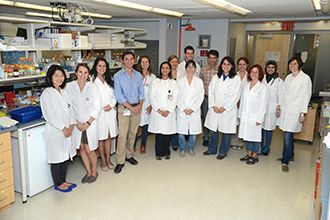
While specific awards aren't documented in the text, his foundational contributions represent field-defining achievements in mitochondrial medicine. No advisory or grant details are provided, though his leadership of CHOP's Mitochondrial Medicine Program indicates significant research oversight. His laboratory operates at the intersection of the Genetics and Cell and Gene Therapy divisions, employing multidisciplinary approaches to develop therapies for mitochondrial disorders through metabolic modulation and epigenetic interventions.