معرفی
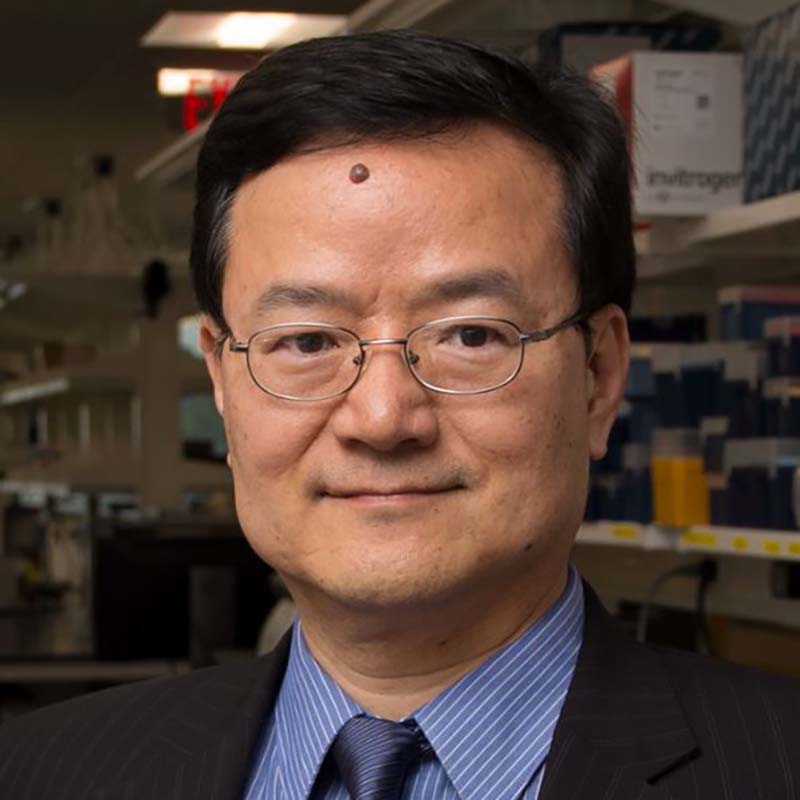
Dingguo Zhang is a Reader in Robotics Engineering at the Department of Electronic & Electrical Engineering, Faculty of Engineering & Design, University of Bath. He is affiliated with several interdisciplinary research centers including the UKRI Centre for Doctoral Training in Accountable, Responsible and Transparent AI, the Centre for Bioengineering & Biomedical Technologies (CBio), the Bath Institute for the Augmented Human, and IAAPS. His work bridges robotics, neuroscience, and biomedical engineering to develop advanced assistive and rehabilitative technologies.
His research focuses on Rehabilitation Robotics, Neural Technologies, Brain-Computer Interfaces (BCIs), and Robotic Exoskeletons. He investigates how neural signals such as EEG and EMG can be used to control prosthetic devices, exoskeletons, and communication systems, particularly for individuals with neurological impairments. His work also involves signal processing, machine learning, and adaptive control strategies to improve human-machine interaction. Key themes include decoding motor and speech intentions, fatigue assessment, and closed-loop neuromodulation.
The recent publications reflect a strong trend toward invasive and non-invasive neural interface development, especially in decoding speech from intracranial EEG and enhancing BCI performance through advanced preprocessing and deep learning. There is also significant focus on wearable robotics for stroke and spinal cord injury rehabilitation, with integration of soft actuators, hybrid control, and real-time adaptation. Multimodal sensing (e.g., EEG-fNIRS, EMG-force) and patient-centered design are recurring elements across his work.
Dr. Zhang has received recognition through his status as an IEEE Senior Member (EMBS, RAS, SMC) and IFESS Lifetime Member. He serves on the editorial boards of five journals including IEEE Transactions on Neural Systems & Rehabilitation Engineering and Frontiers in Neurorobotics, and has held leadership roles such as co-chair of IFESS 2024.
He is actively involved in research funding and supervision. He is Principal Investigator (PI) on the EPSRC-funded dSPEECH project, which aims to decode speech using invasive BCIs, and Co-Investigator on an NIHR-funded project developing an ear-switch-controlled exoskeleton for stroke rehabilitation. He welcomes PhD students and is committed to training the next generation of researchers in neurotechnology and robotics.
Dr. Zhang leads or contributes to research within collaborative labs and teams focused on bioengineering, augmented human systems, and accountable AI. These include the Centre for Bioengineering & Biomedical Technologies and the Bath Institute for the Augmented Human, where interdisciplinary teams develop next-generation assistive technologies grounded in ethical and transparent AI principles.