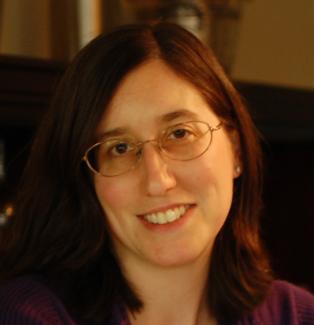
Dietlind Stolle
دانشیار · Social Capital
Max Planck Institute for the Study of Religious and Ethnic Diversityمعرفی
Dietlind Stolle is Associate Professor of Political Science at McGill University and Director of the Centre for the Study of Democratic Citizenship since 2013. She serves on the Board of Directors of the Canadian Political Science Association and has held guest professorships at Wissenschaftszentrum Berlin and University of Zürich. Her research spans comparative politics with focus on social capital, political consumerism, and diversity in democratic societies.
Education
- Ph.D. in Politics, Princeton University (2000)
- M.A. in International Studies, Claremont Graduate University (1993)
- John S. Knight Fellowship, Stanford University (1991)
- Professional Journalism Education, Association of Journalists of GDR, Rostock (1987)
Research Focus
Professor Stolle investigates how diverse social networks shape civic attitudes and political behaviors, particularly among youth. Her work examines institutional foundations of social capital, political consumerism as a form of political participation, and consequences of ethnic diversity on social cohesion. She explores biological sources of political behavior and new media's impact on political engagement through projects including the Comparative Youth Survey and Canadian Election Study.
Scientific Recognition
- Award for Excellence in Undergraduate Teaching, McGill (2008-2009)
- Best Paper on European Politics Award, APSA (2003)
- Woodrow Wilson Society Fellowship (1998-2002)
- Andrew W. Mellon Doctoral Research Grant (1998)
- Aspen Institute Dissertation Grant (1998/1999)
- Friedrich-Ebert Foundation Fellowship (1993-1996)
Mentorship and Funding
Professor Stolle has trained over 45 undergraduate and graduate students, supervising 7 Ph.D. completions and currently advising 4 doctoral candidates. She leads SSHRC and FQRSC-funded projects including longitudinal studies of Canadian youth, inter-ethnic contact effects, and Quebec student protests. Her current research examines brain physiology in political decision-making and multiculturalism support.
Collaborative Initiatives
She co-directs the Comparative Youth Survey and US Citizenship, Involvement and Democracy survey, collaborating with Max Planck Institute on Religious and Ethnic Diversity. Her international teams span Europe and North America, investigating political consumerism, social networking sites, and vegetarianism as political participation.