معرفی
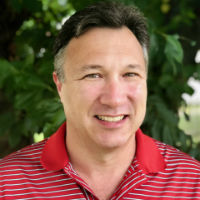
Didier Devaurs is a Lecturer in the Department of Computer and Information Sciences at the University of Strathclyde since June 2024. He holds a PhD in Artificial Intelligence from Université de Toulouse (2015) and has interdisciplinary expertise spanning computer science, mathematics, biology, and chemistry. His research focuses on computational modeling of biomolecular systems and robotics-inspired algorithms, with applications in structural bioinformatics, drug discovery, and personalized medicine. He serves on the editorial boards of Archives of Biochemistry and Biophysics, BMC Bioinformatics, and Biomolecules.
- Education:
- PhD in Artificial Intelligence, Université de Toulouse (2015)
- MSc in Computer Science, University of Lyon (2006)
- BSc in Computer Science, Université Clermont Auvergne (2004)
- Teacher Certification in Mathematics (2003)
Research Interests: Interdisciplinary projects at the intersection of artificial intelligence and structural bioinformatics, including biomolecular AI, protein-ligand docking, molecular caging prediction, and hydrogen/deuterium exchange analysis. He develops algorithms for high-dimensional space exploration in robotics and computational biology, with applications in cancer immunotherapy and SARS-CoV-2 protein analysis.
Publications & Impact: Over 50 peer-reviewed articles, including 15 first-author papers, with four highly cited works. His tools like DINC-COVID and MoMA-LigPath are widely used in computational biology. Recent work emphasizes clinical interpretation of genetic mutations using deep mutational scanning.
- Awards:
- Editor of Distinction Award (2025)
- Finalist, STEM for BRITAIN poster competition (2023)
Teaching & Mentorship: Teaches bioinformatics and AI courses. Supervised 18 graduate/undergraduate students across institutions, including the University of Edinburgh and Rice University. Actively involved in mentoring researchers in interdisciplinary projects.
Labs/Teams: Leads research groups focused on computational methods for biomedical applications, collaborating globally on projects funded by initiatives like the Faculty of Science Starter Grant (£300K+ in funding secured).