معرفی
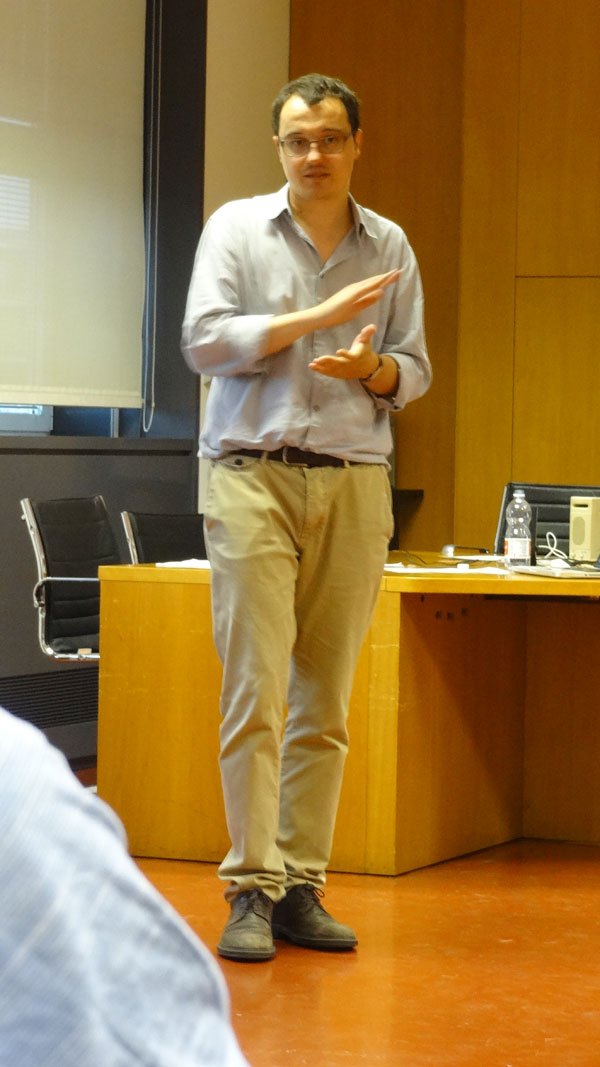
Denys Gorbach serves as a Postdoctoral Fellow at Lund University's Division of Ethnology within the Department of Arts and Cultural Sciences. He also holds an adjunct position at the University of Versailles-Saint-Quentin. His institutional affiliation places him within Lund's Faculty of Humanities, where he conducts research at the intersection of political anthropology and sociology.
Dr. Gorbach's research focuses on conspiracy theories, everyday politics, migration, labor studies, and political economy with particular expertise on Eastern Europe, especially Ukraine. His work examines how social contexts shape political knowledge production, with current projects investigating conspiracy theories in Belgium and survival strategies of Ukrainian refugees in France. His scholarship bridges theoretical frameworks of moral economy, political subjectivity, and class formation.
Analysis of his recent publications reveals consistent engagement with post-Soviet political transformations, particularly regarding working-class politics in Ukraine. His research demonstrates methodological rigor through extensive ethnographic fieldwork, combining political economy approaches with anthropological insights into everyday political practices. The publications show increasing recognition, with his 2024 monograph receiving positive reviews from prominent scholars in the field.
Dr. Gorbach has secured significant research funding, including participation in the Horizon Europe-funded CONSPIRATIONS project (2023-2028) and the dīcit project on disinformation and conspiracy theories. He has taught sociology and political science courses since 2019 at various institutions, delivering instruction in both English and French across multiple universities.
His collaborative research network spans multiple European countries, with particular emphasis on France and Belgium. Current projects involve interdisciplinary teams examining how societies construct the concept of 'conspiracy theory' and how its meaning is shaped by social context. His fieldwork methodology combines ethnographic observation with in-depth interviews to explore political knowledge production in contemporary societies.