معرفی
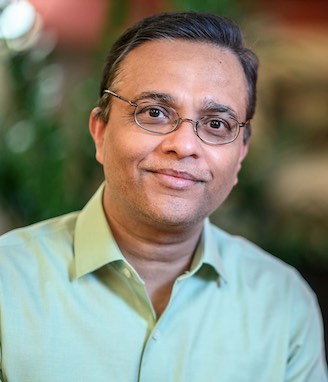
Dean Jacobs is a prolific computer-science researcher whose career has focused on database systems, cloud computing, and software-as-a-service architectures. While no current institutional affiliation is provided in the dblp source, his continuous publication record in top-tier venues such as SIGMOD, VLDB, CIDR, IEEE CLOUD, and BTW from 1982 to 2013 attests to senior faculty status.
Education
- PhD, Computer Science, Cornell University, USA, 1985 (Dissertation: General Correctness: A Unification of Partial and Total Correctness)
Research Interests
Jacobs’ research spans the full lifecycle of data management in cloud and enterprise environments. Early work concentrated on type systems and formal semantics for database programming languages, contributing foundational insights into algebraic specifications, delayed updates, and active-database rule semantics. During the 2000s his focus shifted to multi-tenant architectures and SaaS, pioneering schema-mapping techniques, extensibility models, and performance-prediction methods for large-scale, elastic database clusters. More recently he has investigated operational business intelligence, real-time analytics, and SLA-aware resource management for cloud-hosted transactional and analytical workloads.
Publication Trends
Across three decades, Jacobs has produced a coherent body of work that moves from theoretical database-language design to applied cloud-data management. The 1990s papers revolve around formal methods—type theory, rule languages, and transaction semantics. From 2003 onward, the emphasis transitions to SaaS and cloud systems: multi-tenancy, elasticity, and service-level guarantees. His 2010–2013 output integrates these themes into practical systems for operational BI and robust tenant placement in in-memory clusters.
Collaborations & Mentoring
Although advisees are not listed in the dblp data, Jacobs has an extensive co-author network including Alfons Kemper, Stefan Aulbach, Jan Schaffner, Richard Hull, and Michael Seibold, indicating long-standing collaborative relationships and likely supervision of graduate students and post-docs.