معرفی
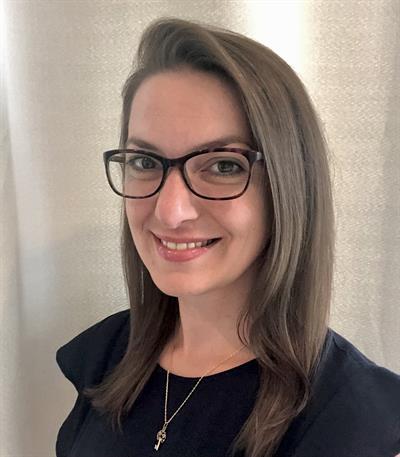
David Proctor serves as Teaching Professor in the Department of History and Department of Classical Studies at Tufts University's School of Arts and Sciences, with additional appointments in University College Administration. A 'triple jumbo' who earned all three degrees at Tufts, he has taught continuously since 1996 with primary focus on Late Antique and Medieval European history.
His academic credentials demonstrate deep institutional roots:
- B.A. in History and Classics (1994)
- M.A. in History (2001)
- Ph.D. (2010)
Proctor's research centers on Byzantine society with particular emphasis on women's roles, as evidenced by courses like 'Empresses, Saints & Scholars: The Women of Byzantium' and lectures such as 'Women of Byzantium: A Forgotten History.' His scholarship also examines the intersection of religious and political authority in medieval Europe, notably through his analysis of imperial symbolism in 'Imperial Christ: Perceptions of Authority in Medieval Western Europe.'
Though his publication output remains concentrated in two major works, these reflect consistent thematic focus on Byzantine cultural dynamics and medieval power structures, with 'The End of Byzantium' review demonstrating critical engagement with Byzantine historiography.
He has received exceptional teaching recognition through Tufts' Senior Survey:
- Best Course: 19 mentions (2018), 14 mentions (2017)
- Intellectual/Personal Development: 46 mentions (2018), 48 mentions (2017)
Proctor actively mentors graduate students through thesis supervision and doctoral dissertation guidance while maintaining significant administrative commitments. His committee service spans academic governance (Executive Committee for Arts, Sciences, and Engineering), student support (Student Accessibility Services Faculty Advisory Board), and scholarship review (Beinecke Memorial Scholarship Committee).
He serves as core faculty in four interdisciplinary programs—International Relations, Archaeology, Middle Eastern Studies, and Medieval Studies—demonstrating his integrative scholarly approach across departmental boundaries.