معرفی
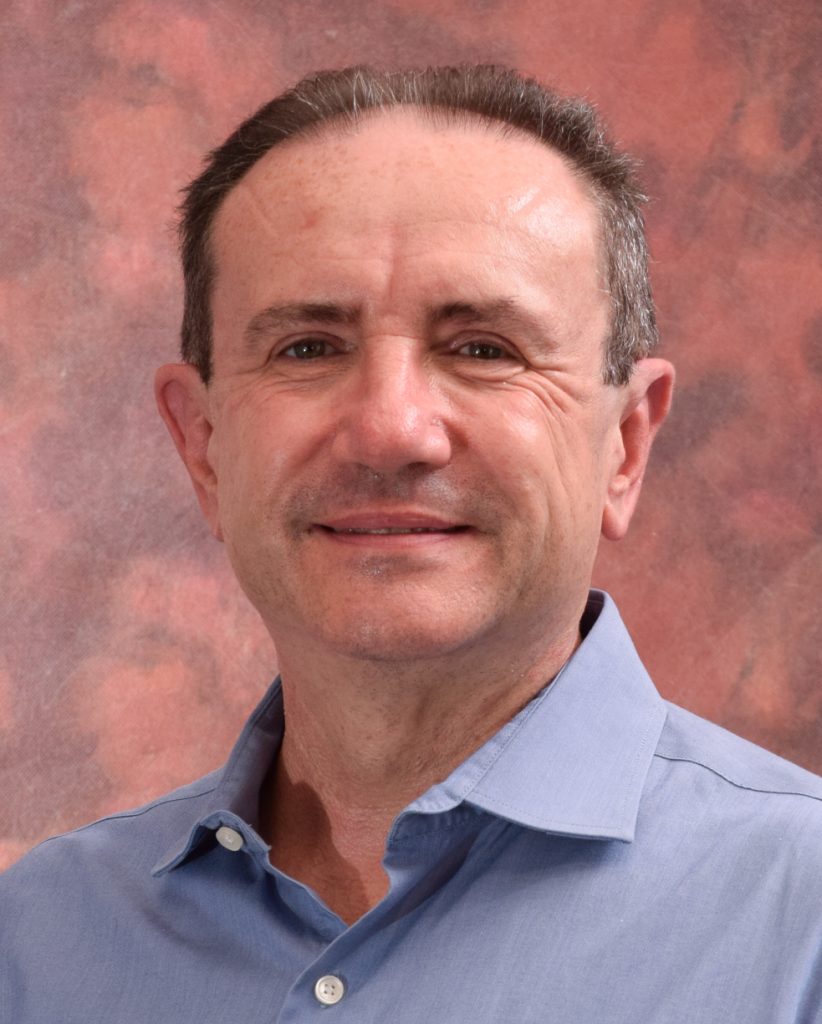
David Poole is a Professor of Computer Science at the University of British Columbia, where he has established himself as a leading researcher in Artificial Intelligence with an h-index of 52 and over 19,000 total citations. His academic career spans more than three decades, with publications dating from 1985 to 2025, demonstrating sustained research productivity and relevance in the field.
Professor Poole's research focuses on the integration of logical and probabilistic approaches to artificial intelligence. His work bridges symbolic AI and statistical methods, creating frameworks that handle uncertainty while maintaining logical expressiveness. He has made seminal contributions to probabilistic Horn abduction, Bayesian networks, and statistical relational artificial intelligence. His theoretical work on the Independent Choice Logic (ICL) has provided foundational frameworks for representing and reasoning with uncertainty in complex domains. His applied research spans geological analysis, educational technology, and mineral exploration.
Professor Poole has authored influential textbooks including 'Computational Intelligence: A Logical Approach' (1998, 1,915 citations) and 'Artificial Intelligence: Foundations of Computational Agents' (2010, 1,750 citations), which have shaped AI education globally. His recent publications (2020-2025) demonstrate continued innovation in knowledge hypergraphs, relational neural networks, and geological hazard mapping applications.
His most impactful research areas include:
- Statistical Relational Learning (as evidenced by the 2016 book 'Statistical Relational Artificial Intelligence')
- Knowledge Graph Embeddings and Hypergraphs
- CP-nets for preference representation (1,293 citations)
- Lifted probabilistic inference techniques
- Applications of AI in geological hazard prediction
Professor Poole maintains active research collaborations with institutions worldwide, including Google DeepMind, universities in Hong Kong, Germany, and the United States. His work continues to influence both theoretical foundations and practical applications of artificial intelligence.