معرفی
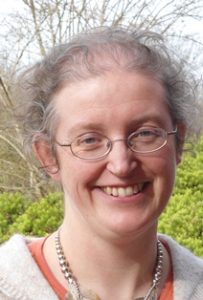
David Mason is a Professor in the Department of Geography and Environmental Science at the University of Reading, United Kingdom. His research is centered on remote sensing applications for flood detection, inundation modeling, and environmental monitoring, with a focus on Synthetic Aperture Radar (SAR) and LiDAR technologies. He has made significant contributions to urban flood mapping, data assimilation in hydrological models, and the integration of high-resolution remote sensing data into flood forecasting systems.
His research interests include:
- Remote sensing of floods using SAR and optical imagery
- Data assimilation in hydrodynamic models
- Urban and rural flood modeling
- Digital elevation model (DEM) enhancement using remote sensing
- Environmental monitoring with LiDAR and satellite data
- Geospatial analysis for disaster risk reduction
His recent publications show a consistent focus on improving flood detection algorithms using Sentinel-1 SAR data, evaluating ensemble flood forecasts, and developing porosity-based models for large-scale simulations. The articles reflect a strong interdisciplinary trend combining hydrology, remote sensing, and computational modeling to enhance flood prediction accuracy and response capabilities.
Scientific contributions and collaborations include:
- Extensive collaboration with leading hydrologists such as Paul Bates, Sarah Dance, and Hannah Cloke
- Contributions to major projects including EU TIDE and UK NERC Flood Risk programs
- Technical reports for ECMWF on soil moisture assimilation
- Authorship of book chapters on flood remote sensing and data utilization
David Mason has advised or collaborated with numerous researchers and PhD students in the field of environmental remote sensing. His work has been supported by UK research councils, the European Union, and international agencies. He has contributed to the calibration and validation of flood models using airborne and satellite data, and has developed novel algorithms for flood extent mapping in complex urban environments.
He has been actively involved in research teams and projects focused on:
- The FREE (Flood Risk from Extreme Events) consortium
- The TIDE project on tidal marsh ecogeomorphology
- ECMWF initiatives on hydrological data assimilation
- Development of the LISFLOOD-FP flood model