معرفی
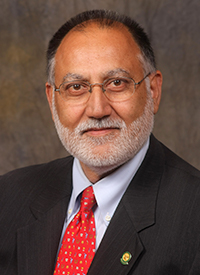
David Machlis is an Associate Professor in the Finance and Economics Department at the Robert B. Willumstad School of Business, Adelphi University. He holds a Ph.D. in Economics from Rutgers University (1971) and a B.B.A. in Economics from Baruch College/CUNY (1964), with a long-standing academic and professional career focused on public finance, education economics, and human capital.
- Ph.D. in Economics, Rutgers University, 1971
- B.B.A. in Economics, Baruch College/CUNY, 1964
His research centers on the economic impact of higher education, particularly its role in income redistribution, equity, and public financing. He has extensively explored bilingual education, human capital development, and the ethical dimensions of economic policy, especially in the context of Holocaust education and business ethics. His scholarly work bridges economic theory with social justice and historical reflection.
The 15 most recent publications reflect a consistent focus on education economics, public policy, and ethical economics. Key themes include income distribution, public financing of education, human capital, and the societal implications of economic data and policy. His later works increasingly integrate moral and historical perspectives, particularly through Holocaust-related educational initiatives and ethical leadership in business.
- Caritas Award, College of St. Elizabeth, 2006
- Distinguished Faculty Excellence Award, Adelphi University, 2005
- Professor of the Year candidate, multiple years
- National Defense Education Act Fellowship, 1964–1967
- Elected to Beta Gamma Sigma, 1964
- Flambeau Award, Adelphi University, 1975
- Outstanding Young Men of America, 1978
David Machlis has held significant administrative roles including Associate Dean of Academic Affairs and Director of the Urban Center at Adelphi University. He has served as a consultant and expert witness in economic loss cases and has been deeply involved in educational outreach, particularly through the March of Remembrance and Hope program, which he helped design and lead. He has organized numerous international study missions to Poland, leadership seminars, and interfaith symposia, often securing external support and collaboration with national educational bodies. His work demonstrates sustained grant-like initiative and program development, though specific funding sources are not listed.
He founded and leads the March of Remembrance and Hope Educational Study Mission to Poland, a major international program engaging hundreds of students and faculty from North America. He also organized the Leadership Training Seminars and collaborated with institutions like the U.S. Holocaust Memorial Museum and the National Catholic Center for Holocaust Education. His initiatives form a cohesive network focused on combating intolerance and promoting ethical leadership through historical education.