معرفی
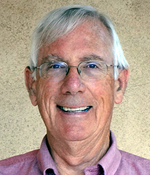
David Kieda is a Distinguished Professor in the Department of Physics & Astronomy at the University of Utah. He has been a faculty member since 1990, advancing from Assistant Professor to his current rank. His expertise lies in high-energy astrophysics, gamma-ray astronomy, and particle astrophysics, with significant contributions to major observatories like VERITAS, HAWC, and the Cherenkov Telescope Array (CTA).
Education:
- PhD, Experimental Astrophysics, University of Pennsylvania (1989)
- S.B., Physics, Massachusetts Institute of Technology (1982)
Research Focus: His research spans TeV gamma-ray astronomy, exploring phenomena like pulsar halos, supernova remnants, blazars, and microquasars. He investigates cosmic-ray acceleration, particle diffusion, and multiwavelength emission mechanisms using data from HAWC, VERITAS, and Fermi-LAT. His work also includes dark matter searches and instrumentation development for gamma-ray telescopes.
Recent Publications: His 2024–2025 publications highlight discoveries of TeV halos around pulsars, ultra-high-energy gamma rays from microquasars, and multiwavelength studies of blazars and supernova remnants. These studies advance understanding of particle acceleration in extreme astrophysical environments.
Awards & Honors:
- Distinguished Professor, University of Utah (2021)
- Fellow, American Physical Society (2011)
- Governor's Medal of Science and Technology, State of Utah (2013)
- Distinguished Scholarly and Creative Research Award, University of Utah (2013)
Professional Service: He serves as Spokesperson for CTAO-US/SCT Collaboration, on the CTAO Consortium Board, and has held leadership roles in VERITAS and the American Physical Society. He mentors graduate students and engages in community outreach, including FIRST Robotics mentoring.
Laboratories & Collaborations: Active in VERITAS, HAWC, and CTA collaborations, contributing to observational strategies, instrumentation, and data analysis for gamma-ray astronomy.