معرفی
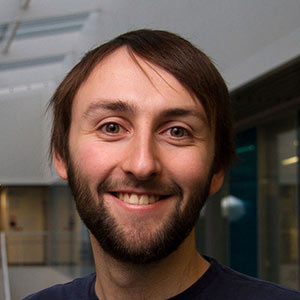
David Bevan is a Lecturer in the Department of Mathematics and Statistics at the University of Strathclyde, Faculty of Science. His research is centered on combinatorics, particularly in the areas of enumerative, asymptotic, probabilistic, and extremal combinatorics, with a focus on permutations and permutation classes.
His research interests include:
- Permutation patterns and avoidance
- Limit shapes and permutons
- Monotone grid classes and structural combinatorics
- Random integer compositions and probabilistic models
- Graph theory and network structures
- Analytic combinatorics and asymptotic enumeration
The trends in his recent publications (2025–2017) reflect a deep and consistent focus on the structural and asymptotic behavior of discrete combinatorial objects, especially permutations. His work often combines probabilistic reasoning, analytic techniques, and extremal analysis to derive enumeration results and characterise limiting behaviors. He frequently collaborates with researchers such as Dan Threlfall, Robert Brignall, and Sergey Kitaev.
David Bevan has served in key professional roles, including:
- Guest Editor, Discrete Mathematics and Theoretical Computer Science (2023)
- Guest Editor, Enumerative Combinatorics and Applications (2021)
- Organiser, Permutation Patterns 2021 Virtual Workshop
- Organiser, Scottish Combinatorics Meeting 2023
- Peer Reviewer, Combinatorial Theory (2023)
He is the Principal Investigator on the Maths DTP 2020 project at the University of Strathclyde (2020–2025), focusing on combinatorial research with PhD student Daniel Threlfall. He has delivered numerous invited talks at international workshops and conferences, including at Oberwolfach, Dagstuhl, and the Permutation Patterns series.
David Bevan leads research within the Strathclyde Combinatorics Group and maintains an active research blog. He teaches courses in graph theory, networks in finance, logic, computation, and computer systems, reflecting his interdisciplinary expertise bridging mathematics and computer science.