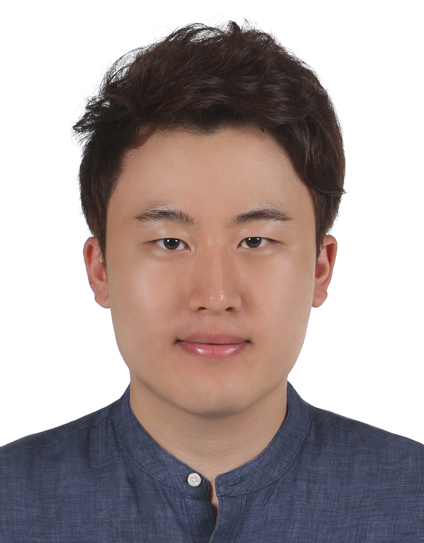
Daniel Sage
استاد · The geometric Langlands program
State University of New York at Buffaloمعرفی
Daniel Sage serves as Professor and Chair of the Department of Mathematics at the University at Buffalo, where he maintains an active research program spanning pure and applied mathematics. His leadership role as department chair underscores his institutional significance within the university's academic structure.
His educational trajectory demonstrates exceptional academic achievement:
- AB in Mathematics, Summa cum laude, Harvard University (1989)
- SM in Mathematics, University of Chicago (1990)
- PhD in Mathematics, University of Chicago (1995)
Sage's research agenda bifurcates into two distinct but equally rigorous domains. His primary work in pure mathematics centers on the geometric Langlands program, where he investigates opers, connections on algebraic curves, and moduli spaces through geometric and combinatorial representation theory. This includes significant contributions to quantum groups and Hopf algebras. Concurrently, he explores composite materials science through the G-closure problem. His secondary research stream analyzes bibliometric patterns, examining citation dynamics, h-index validity, and research evaluation methodologies across disciplines.
Analysis of his 15 most recent publications (2013-2023) reveals a strong concentration in geometric representation theory and mathematical physics, with approximately 75% of articles addressing Langlands program extensions, quantum group structures, and algebraic geometry applications. The remaining 25% focuses on scientometric investigations, particularly citation network analyses comparing Nobel laureates and Fields medalists. This dual focus demonstrates unusual breadth across theoretical mathematics and empirical research evaluation.
No scientific awards or honors are documented in the provided materials.
While his departmental chair position suggests administrative responsibilities, no specific information regarding graduate student advisement, grant funding, or research mentorship activities appears in the source texts.
The absence of laboratory facilities or dedicated research teams in the documentation indicates Sage's work is primarily theoretical, conducted through individual scholarship and collaborative mathematical research rather than experimental or equipment-dependent investigations.