معرفی
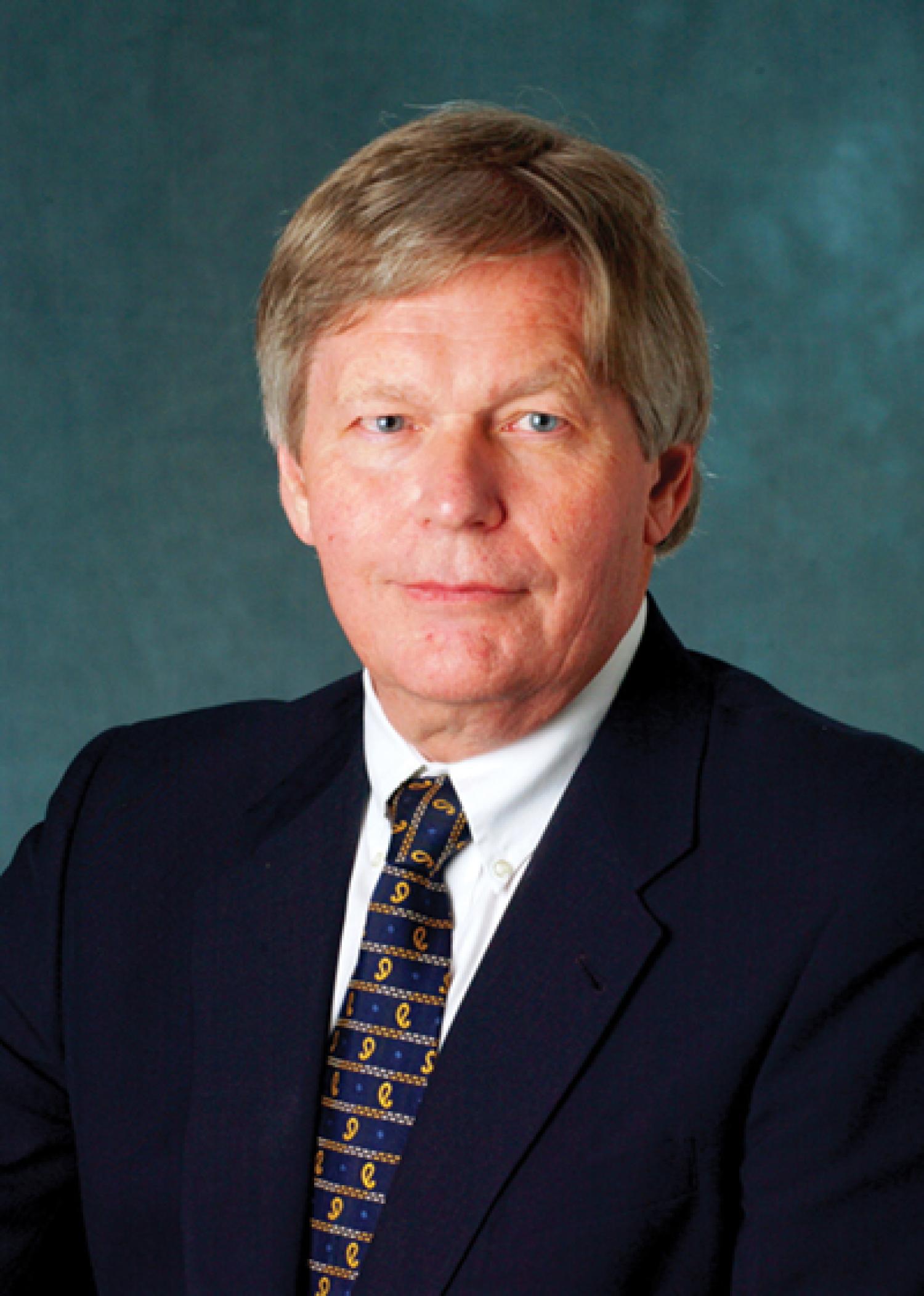
Dan Baker is a Distinguished Professor at the University of Colorado Boulder, holding joint appointments in the Department of Astrophysical and Planetary Sciences, the Department of Physics, and the Department of Aerospace Engineering Sciences. He is a leading figure in space and planetary physics, with a career centered on understanding plasma and energetic particle phenomena in planetary magnetospheres, particularly Earth's.
His research focuses on space instrument design, space physics data analysis, and magnetospheric modeling. As a principal investigator on multiple high-profile NASA missions—including the Geospace Dynamics Constellation, Magnetospheric MultiScale (MMS), Interstellar Mapping and Acceleration Probe (IMAP), and the Van Allen Probes—he plays a central role in advancing our understanding of space weather and geospace environments.
Dan Baker has published over 900 refereed papers and edited nine books in the field of space physics, demonstrating sustained scholarly impact across decades. His work bridges theoretical modeling, observational data, and instrumentation, contributing broadly to astrophysics, aerospace engineering, and planetary science.
He has received numerous honors and recognitions, including:
- Fellow of the American Geophysical Union (AGU)
- Fellow of the American Institute of Aeronautics and Astronautics (AIAA)
- Fellow of the American Association for the Advancement of Science (AAAS)
- Member of the International Academy of Astronautics (IAA)
- Member of the U.S. National Academy of Engineering
Dan Baker has served as an investigator on multiple NASA space missions, contributing significantly to mission science and data interpretation. His leadership in large-scale collaborative projects underscores his role in mentoring students and early-career scientists, managing research teams, and securing competitive research funding. His work continues to shape the future of space exploration and space environment modeling.
He is affiliated with the Laboratory for Atmospheric and Space Physics (LASP) at CU Boulder, a premier research center for space science and engineering, where he contributes to instrument development, mission operations, and data systems. His interdisciplinary work integrates efforts across physics, planetary science, and aerospace engineering, fostering innovation in space-based observation and analysis.