معرفی
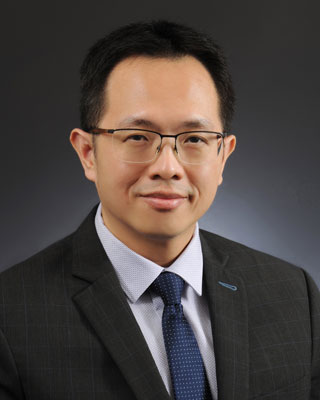
Damien Colombet is a Lecturer in the Thermal Engineering Department at the University Institute of Technology of Grenoble (IUT), part of Grenoble Alpes University. He conducts research within the ENERGY team at LEGI (Laboratory of Geophysical and Industrial Flows - UMR 5519), focusing on fundamental and applied aspects of two-phase flows and heat transfer. His work bridges theoretical modeling, experimental validation, and practical applications in microfluidic systems.
His educational background includes:
- 2025: HDR (Accreditation to Direct Research) on 'Fundamental and applied aspects of two-phase flow transfers'
- 2012-2013: PostDoctoral researcher at CNES/LEGI on cavitating flow simulation
- 2008-2012: PhD at IMFT/LISBP in Toulouse on 'Modelling of gas-liquid reactors with a bubble column'
- 2002-2007: Engineer in fluid mechanics at INSA Rouen
Colombet's research primarily focuses on cavitation phenomena in microsystems, two-phase flows, and heat and mass transfer processes. His work combines experimental approaches using microfluidic platforms ('labs-on-a-chip') with numerical modeling to investigate fundamental fluid dynamics phenomena with applications ranging from space cryocoolers to graphene production. He has developed expertise in hydrodynamic cavitation, radical production quantification, and thermal effects in microchannel flows.
His recent publications show a strong trend toward microscale thermal management applications, particularly CO2 evaporation in silicon microchannels for detector cooling systems. The research spans fundamental fluid mechanics, thermal engineering, and materials processing, with increasing emphasis on practical applications in microelectronics cooling and space technology.
His scientific contributions include:
- Fluid degassing process patent (2022)
- Method for exfoliating particles patent (2019)
Colombet has supervised four PhD students to completion, with research topics spanning microchannel cooling, oscillating flows in regenerators, graphene production via liquid-phase exfoliation, and miniaturization of space cryocoolers. His research benefits from access to LEGI's extensive experimental facilities including hydrodynamic tunnels, microfabrication capabilities, and specialized measurement systems for cavitation studies.
His laboratory work is conducted within LEGI's ENERGY team, which focuses on energy conversion processes, thermal systems, and fluid mechanics applied to energy challenges. The team leverages Grenoble's strong ecosystem in cryogenics, microfluidics, and thermal engineering.