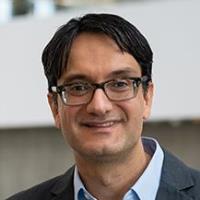
معرفی
Dr. Cyrus Panjvani serves as an Associate Professor in the Department of Humanities at MacEwan University's Faculty of Arts and Science in Edmonton, Alberta, where he has taught since 2006 after positions at the University of Alberta and Ithaca College. His academic profile integrates rigorous scholarship in Asian Philosophies, Philosophy of Religion, and Wittgenstein studies within a comprehensive philosophy curriculum.
His educational foundation includes a PhD in Philosophy from the University of St. Andrews (2002), an MA from Western University, and a BComm from the University of Toronto. This interdisciplinary background informs his distinctive pedagogical approach across foundational and specialized courses.
Research interests demonstrate deep engagement with Buddhist philosophical frameworks, comparative religious epistemology, and Wittgensteinian language analysis. He pioneers connections between Eastern and Western thought through courses like Comparative Philosophy: Buddhism and Hume and Philosophy of Religion of Kierkegaard and Wittgenstein, while his monograph Buddhism: A Philosophical Approach (2014) establishes critical methodologies for cross-cultural philosophical examination.
Publication trends reveal consistent exploration of ethical foundations across traditions, linguistic philosophy, and environmental thought, with recurring themes of transcultural dialogue and conceptual rigor evident in his review of Gandhi-Stoicism intersections and Wittgenstein-focused analyses.
Scientific recognition includes:
- MacEwan University Faculty of Arts and Science Research Grant (2008)
- MacEwan University Scholarly Activity Grant (2007)
- Royal Institute of Philosophy Jacobsen Fellowship (2000-1)
- SSHRC Doctoral Fellowship (1998-2000)
- British Chevening Fellowship (1999-2000)
Dr. Panjvani maintains active mentorship through senior independent studies supervision and research collaboration, leveraging his substantial grant history to advance student scholarship. His ongoing work continues to shape philosophical discourse at the intersection of global traditions and contemporary analytical frameworks.