معرفی
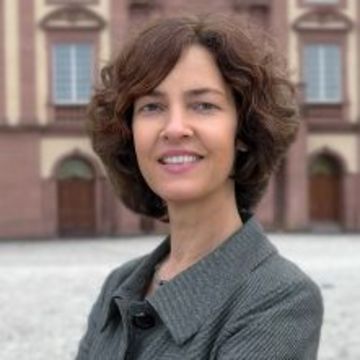
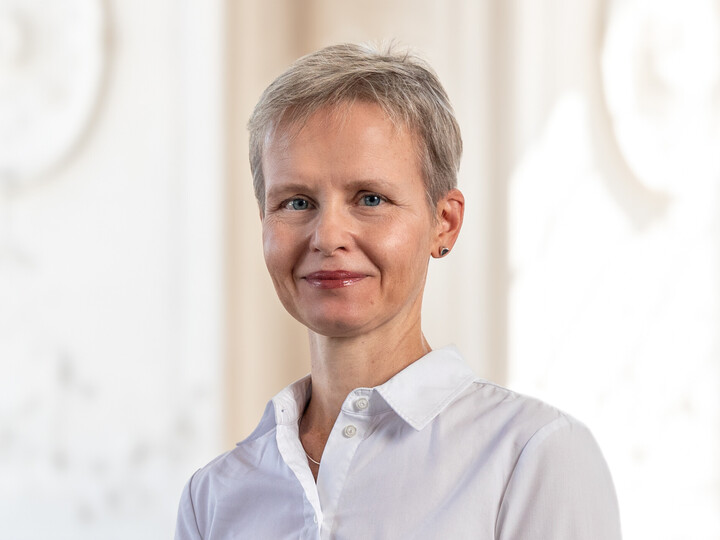
Professor Cornelia Ruhe serves as Vice President for Student Affairs and Teaching at the University of Mannheim and Dean of the School of Humanities. She has been Professor of Romance Literary and Media Studies at the University of Mannheim since 2010, with a distinguished career spanning academic leadership and literary scholarship.
Her academic journey began with studies in Romance, Slavic, and English and American Studies at the Universities of Regensburg and Konstanz. She obtained her doctoral degree in 2022 and earned her habilitation in 2009, demonstrating exceptional scholarly progression.
Ruhe's research centers on French and Spanish literature from the twentieth and twenty-first centuries, with particular expertise in postcolonial literature and film. Her core methodologies engage intertextuality, cultural semiotics, and cultural memory studies to analyze identity formation, historical trauma, and narrative structures. This interdisciplinary approach bridges literary analysis with sociopolitical contexts.
Her recent publications reveal a pronounced focus on contemporary Francophone and Hispanic literary production, especially works by Mohamed Mbougar Sarr. Key thematic clusters include thanatology (death/mourning rituals), postcolonial identity politics, and cinematic representations of cultural memory. The recurring exploration of labyrinths, genealogical fractures, and transnational narratives underscores her theoretical innovation.
Her significant recognition includes:
- Membership in the Heidelberg Academy of Sciences and Humanities (2018)
As an academic leader, Ruhe has served on the University of Mannheim Senate since 2014 and as School of Humanities Dean since 2022. Her editorial stewardship of Romanische Forschungen since 2016 demonstrates sustained scholarly contribution. While specific grant funding isn't detailed, her prolific output indicates robust research support. Her administrative roles reflect deep commitment to academic governance and student development.
No dedicated research laboratories or specialized teams are mentioned in available materials, though her editorial work suggests collaborative scholarly networks.