معرفی
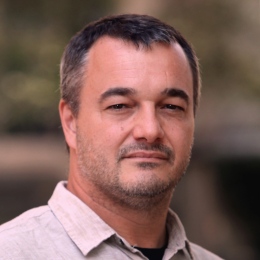
Colin Farrelly is the Sir Edward Peacock Professor of Political Theory at Queen's University, cross-appointed with the Department of Philosophy and occasionally teaching in the School of Policy Studies. He holds a PhD from the University of Bristol, along with degrees from McMaster University. His research focuses on political philosophy, bioethics, and the ethics of biomedical advancements, particularly in aging and geroscience. Farrelly has held academic positions globally, including at Oxford, UCLA, and Waterloo University. His work integrates normative theory with empirical insights from biology, demography, and medicine, emphasizing the Enlightenment's ideals of reason and progress.
Education:
- B.A. in Political Studies, Philosophy from McMaster University
- M.A. in Political Studies, Philosophy from McMaster University
- Ph.D. in Political Theory from the University of Bristol
Research Interests:
Farrelly's interdisciplinary work spans political theory, bioethics, and the societal implications of longevity science. Key topics include geroscience (healthy aging), climate geroscience, virtue ethics, and justice in genomic contexts. He advocates for 'positive biology' to refocus medical sciences on healthspan extension and critiques 'folkbiology' in public health discourse.
Recent Articles:
Recent publications address intersections of aging, climate science, and ethical policy. He emphasizes the societal and ethical dimensions of longevity research, arguing for science that prioritizes human well-being over disease-focused paradigms.
Labs/Teams: Collaborates with global networks in geroscience and biomedical ethics, though no specific lab is named. His work often involves interdisciplinary teams across philosophy, medicine, and policy.