معرفی
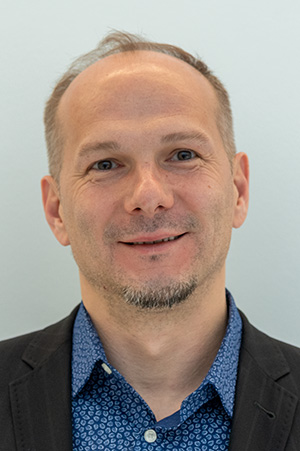
Claudiu Genes is a Group Leader at the Max Planck Institute for the Science of Light (MPL), where he heads the research group focused on Cooperative Quantum Phenomena. He conducts theoretical and applied research at the forefront of quantum optics and light-matter interactions, with a strong emphasis on collective quantum effects in hybrid systems. His work bridges quantum information, cavity quantum electrodynamics, optomechanics, and molecular physics, aiming to develop new platforms for quantum technologies.
His research interests span Quantum Optics, Cavity Quantum Electrodynamics, Optomechanics, Light-Matter Interaction, Collective Quantum Effects, and Molecular Quantum Physics. He investigates phenomena such as entanglement generation, quantum cooling, non-adiabatic molecular dynamics, and chiral sensing using advanced quantum optical techniques. His theoretical frameworks often enable experimental realizations in state-of-the-art photonic and optomechanical systems.
The recent publications (2024–2025) reveal a strong trend toward hybrid quantum systems involving molecules, mechanical oscillators, and photonic structures. Key themes include quantum entanglement in optoacoustic systems, terahertz polaritonics with organic molecules, nonlinear optovibronic interactions, and chiral sensing via metasurface cavities. These works combine deep theoretical insight with practical applications in quantum sensing and information processing.
Scientific Awards:
- No awards listed in the provided text.
Dr. Genes leads an independent research group and is actively involved in mentoring and collaborative research. While specific students and grants are not mentioned, his leadership role implies supervision of junior researchers and participation in large-scale scientific collaborations. His group likely collaborates with experimental teams at MPL and beyond to validate theoretical predictions.
Labs and Teams: He leads the Cooperative Quantum Phenomena group at MPL, which focuses on theoretical quantum optics and open quantum systems. The group works closely with experimental teams at the institute, particularly in areas involving cavity optomechanics, quantum metasurfaces, and molecular polaritonics.