
معرفی
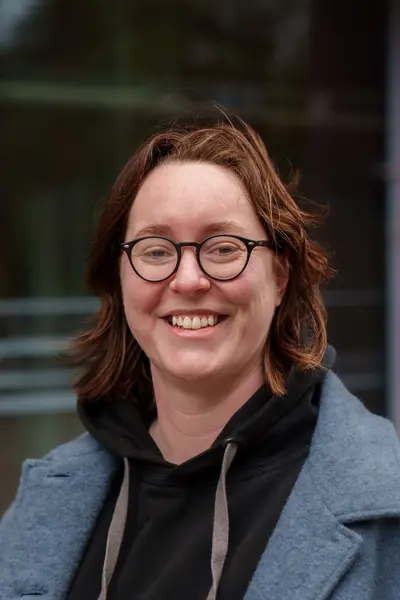
Claudia Lenz is a Researcher in the Chemistry and Physics of Wood at the Eberswalde University of Sustainable Development (HNEE), School of Wood Engineering. She has been working at HNEE since 2016, initially in Wood Biology (2016-2019) and subsequently in Chemistry and Physics of Wood (since 2019), with a brief affiliation with Botany and Phytopathology in 2018.
Her educational background includes a Master's degree in Wood Technology (M.Sc.) from HNEE (2015-2017) with distinction, focusing on 'Anatomical Studies of Spruce Cores,' and a Bachelor's degree in Wood Technology (B.Sc.) from HNEE (2011-2015), where she received the Gunther-Wolff Prize for outstanding theses. She also completed vocational training as a furniture carpenter (2009-2011).
Dr. Lenz's research focuses on wood chemistry, physics, and anatomy, particularly color changes due to radiation exposure, wood aging processes, and microscopic surface analysis. Her work bridges material science, chemistry, and machine learning, with significant contributions to understanding radiation dose effects on wood coloration rather than time-based evaluation, representing a novel approach in the field.
Her current research includes the WAVE project (2025-2027) using AI algorithms to predict wood aging processes, and the DFG-funded project on color changes of indoor wood (2021-2024). She has developed expertise in advanced analytical techniques including UV microspectrophotometry (UMSP) with 0.25 μm resolution for detecting aromatic compounds in wood cell structures.
- DFG Research Project: 'Predictability of color changes of wood used indoor' (2021-2024)
- WAVE: 'Wood Aging Visualization and Estimation' (2025-2027)
- Fichte-Trockenheit: 'Drought risk and adaptation of different spruce populations' (2016-2019)
Dr. Lenz has received recognition including an honorable mention for a popular science abstract designed for 16-year-olds. She serves in university governance as Senate member since 2023 and founding member of the Equality Commission since 2024. Her laboratory work employs advanced techniques like UMSP, ATR-FTIR, UV-Vis spectroscopy, GC-MS, and SRμCT for analyzing wood surface changes and water transport capacity.
Claudia Lenz در سایتهای دیگر
جستوجوهای مرتبط
شاید اینها هم برایتان مناسب باشند
 Maik EichelbaumNuremberg Institute of Technology Georg Simon Ohm · استاد
 Peter SpathelfEberswalde University for Sustainable Development · استاد
 Katharina HelmingEberswalde University for Sustainable Development · استاد
- WWinfried RiekEberswalde University for Sustainable Development · استاد
 Britta GosselEberswalde University for Sustainable Development · استاد
 Matthias BarthEberswalde University for Sustainable Development · استاد