معرفی
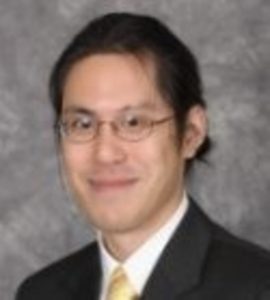
Christopher L. Alexander is an Assistant Professor in the Department of Civil & Environmental Engineering at the University of South Florida. His research focuses on in-situ electrochemical analysis to study corrosion processes in civil infrastructure, including chloride ingress, carbonation, and corrosion in steel-reinforced concrete. He employs multi-physics finite-element models to predict damage propagation and improve design/inspection protocols.
Education: B.S. Civil Engineering (University of South Florida), M.E. Civil Engineering (University of Florida), Ph.D. Chemical Engineering (University of Florida).
Research Interests: Alexander’s work bridges electrochemistry and civil engineering, addressing corrosion mechanisms in infrastructure materials. His studies integrate experimental techniques like electrochemical impedance spectroscopy with computational models to assess material durability. Key themes include galvanic coupling effects, hydrogen embrittlement in post-tensioned tendons, and novel corrosion barrier technologies. He collaborates on sensor development for detecting grout deficiencies in structural tendons.
Publications: His recent work emphasizes electrochemical impedance spectroscopy applications for corrosion monitoring, geometric influences on electrochemical measurements, and durability modeling of stainless steel reinforcement. He also explores hydrogen-related degradation in post-tensioned systems and innovative imaging techniques for infrastructure assessment.
- Awards: McKnight Dissertation Fellowship (2016), DOW BEST Symposium (2016), University of Michigan NextProf (2016).
Teaching: Courses include Materials Engineering (Spring 2019). He is a member of the National Association of Corrosion Engineers and the International Society of Electrochemistry.
Labs/Teams: Active in developing tendon imaging sensors and corrosion detection systems for infrastructure applications. Collaborates on NSF-funded research and patent innovations (e.g., US Patent 9,829,452 B2 for corrosion detection in structural tendons).