معرفی
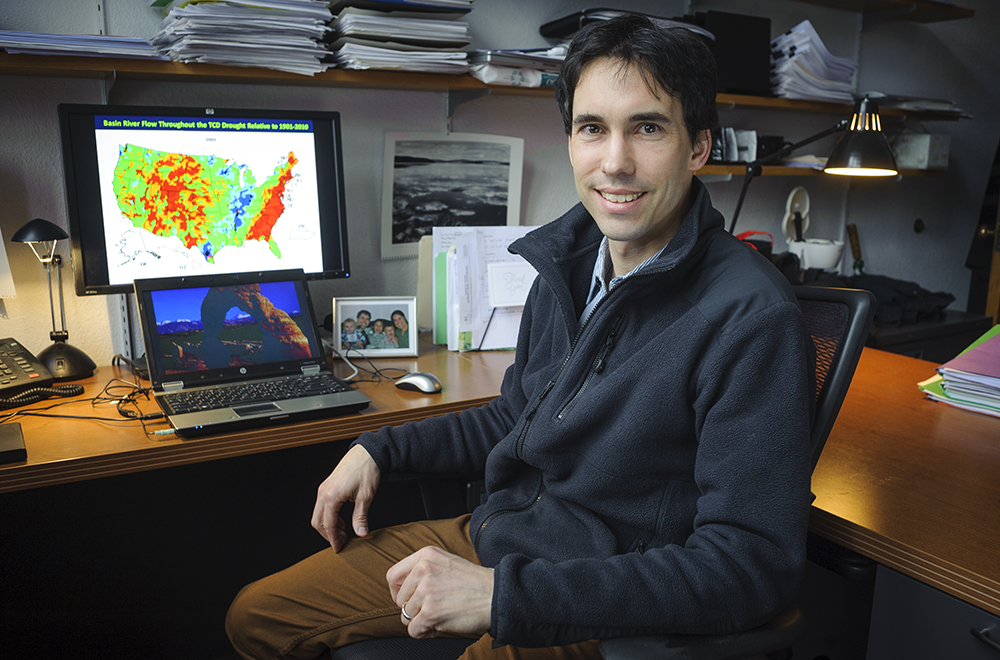
Christopher A. Williams is a Professor of Geography at Clark University's Graduate School of Geography and Director of the Environmental Sciences Program. He leads the Biogeosciences Research Group, conducting foundational research on the climate impacts of forests through satellite remote sensing and big data geo-computation. His work quantifies carbon emissions avoided by protecting forests, carbon removals from forest growth, and climate impacts from surface reflectivity (albedo) changes.
- Ph.D. in Environmental Sciences, Duke University, 2004
- M.S. in Watershed Science, Colorado State University, 2000
- B.A. in Biology and Environmental Studies, Bucknell University, 1996
Williams' research reveals critical insights about where tree planting provides genuine climate benefits. His work shows that forest planting in regions like the U.S. west coast and east of the Mississippi makes climatic sense, but albedo changes make forest planting in the Rockies and southwestern U.S. counterproductive for climate. He developed the National Forest Carbon Monitoring System (NFCMS) to provide actionable data for land managers worldwide. His findings have been featured in Nature, The Washington Post, and other major media outlets as essential science for climate policy.
His publication record demonstrates consistent advancement in forest carbon science, with recent work emphasizing the integration of albedo effects into climate solutions, refinement of forest carbon monitoring systems, and evaluation of nature-based climate solutions across multiple continents and ecosystems from North American forests to Australian drought impacts.
- Co-led Chapter 9: Forests in the Second State of the Carbon Cycle Report (SOCCR2)
- Co-chair of the North American Carbon Program science leadership group
- Science co-investigator of Harvard Forest NSF Long Term Ecological Research
- Science team member of NASA's Carbon Monitoring System
Williams actively mentors students at all levels and has held significant administrative roles at Clark University including vice chair of the faculty and chair of the graduate board. His research is supported by multiple grants from NASA, The Nature Conservancy, US Forest Service, and the Doris Duke Foundation. He collaborates with major environmental organizations including The Nature Conservancy, the Open Space Institute, and The Trust for Public Lands, delivering action-ready datasets to policymakers working worldwide through the U.S. Climate Alliance.