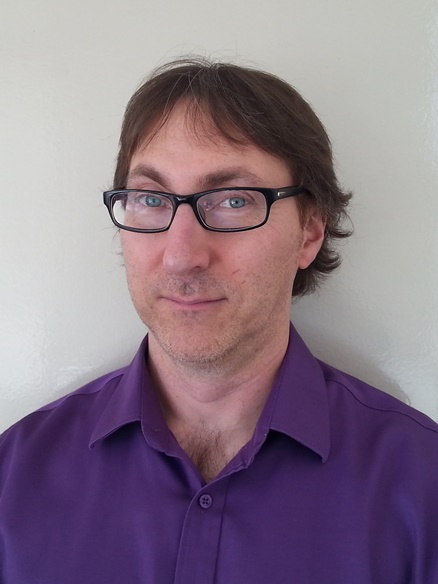
معرفی
Christian Schröder is a University Professor in the Faculty of Chemistry at the Department of Computational Biological Chemistry. With over 100 publications spanning from 2005 to the present, his research has significantly contributed to computational chemistry, molecular simulations, and physical chemistry, particularly in the areas of ionic liquids and solvation phenomena.
Dr. Schröder's research program demonstrates exceptional depth in ionic liquid chemistry, where he investigates solvation properties, polarizability effects, and fundamental molecular behavior. His pioneering work on polarizable force fields has advanced computational methodology by incorporating electronic polarization effects that traditional models neglect. More recently, he has expanded his research to include machine learning applications for predicting blood-brain barrier penetration in drug discovery, bridging computational chemistry with pharmaceutical sciences. His fingerprint analysis reveals expertise in Ionic Liquid Chemistry (100%), Solvation Chemistry (38%), and 1-Ethyl-3-Methylimidazolium Chemistry (24%).
An analysis of Dr. Schröder's publication trends shows a clear evolution from fundamental studies of ionic liquid properties toward increasingly interdisciplinary applications. The most recent publications demonstrate integration of computational chemistry with machine learning and pharmaceutical research, while maintaining strong foundations in physical chemistry principles. His work consistently addresses complex problems requiring sophisticated computational approaches and molecular-level understanding.
Among his professional recognitions, Dr. Schröder received the Preis für gute Lehre 2022 (Teaching Award 2022) on April 27, 2023, highlighting his excellence in academic instruction alongside his research achievements.
Dr. Schröder has supervised numerous students and early-career researchers, with Christian Fellinger appearing as a frequent collaborator on recent projects including GRADE-ing Protein-Ligand Interactions and Blood-Brain Barrier Penetration Prediction. His research has been supported by multiple substantial projects including Proton transfer in protic ionic liquids (2020-2023), Ionenaggreg. von chir.ion.Flüss (2017-2021), and Simulationsanalyse zur Solventd (2015-2018), demonstrating sustained funding success across diverse research areas.
He maintains an active research group focused on computational chemistry methods development and their application to challenging problems in physical chemistry and pharmaceutical sciences. His collaborative network spans multiple disciplines, with recent activities showing strong connections between computational chemistry, toxicology, and cancer research, particularly through collaborations with researchers studying xenoestrogens and breast cancer cell behavior.