معرفی
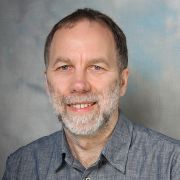
Dr Chris Hawes is a Lecturer in Inorganic Chemistry and Programme Director for Chemistry and Medicinal Chemistry at the School of Chemical and Physical Sciences, Keele University. He completed his PhD at the University of Canterbury, New Zealand in 2012, followed by postdoctoral positions at Monash University, Australia and Trinity College Dublin, Ireland before joining Keele University in late 2017.
Dr Hawes' research focuses on supramolecular coordination chemistry and the synthesis of functional materials. His work heavily utilizes single-crystal X-ray crystallography alongside various physical and spectroscopic characterization techniques. His research spans two main areas: Metal-Organic Frameworks (MOFs) for adsorption, extraction, and separation applications; and fluorescent sensing in coordination polymers and polynuclear coordination compounds. He develops new ligand systems for MOFs to incorporate chemical functionality and unusual structural properties, and creates fluorescent sensors for weakly-interacting analytes using environment-sensitive fluorophores within metallo-supramolecular systems.
His teaching portfolio includes multiple undergraduate modules across environmental chemistry, industrial chemistry, molecular chemistry, materials chemistry, and advanced inorganic chemistry. He serves as Module Leader for several advanced courses and research projects, demonstrating strong commitment to student development.
Recent research publications reveal a strong focus on crystal engineering, materials design, and exploring how molecular structure influences material properties. His group has made significant contributions to understanding hydrogen bonding in coordination compounds, developing stable MOFs for carbon dioxide capture, and creating novel fluorescent sensing materials. The research demonstrates interdisciplinary connections between inorganic chemistry, materials science, and potential biomedical applications.
Dr Hawes actively supervises PhD and MChem students, with several successful completions including Vali Slyusarchuk who moved to a postdoctoral position at the University of Strathclyde. His group regularly presents at national and international conferences and maintains collaborations with researchers at Trinity College Dublin and other international institutions.