معرفی
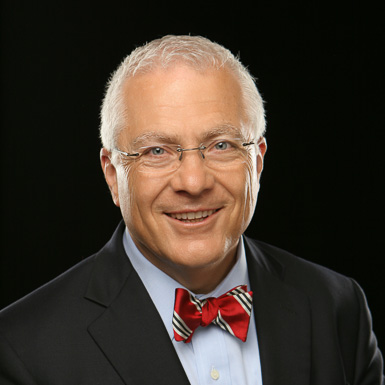
Charly Coleman is an Associate Professor of History at Columbia University, specializing in the European Enlightenment and French Revolution with particular expertise in economic theology and the intersections of religion, philosophy, and political economy.
Education:
- Ph.D., Stanford University (2005)
- B.A., Trinity University, Texas (1998)
His research fundamentally challenges Max Weber's Protestant ethic thesis by documenting a distinct Catholic economic philosophy that privileged consumption over production and enjoyment over delayed gratification. Coleman's award-winning monographs—including The Virtues of Abandon (Laurence Wylie Prize winner) and The Spirit of French Capitalism (Kenshur Prize shortlist)—explore how mysticism, materialism, and discourses of selfhood shaped economic practices in eighteenth-century France. His current project Money and Martyrs extends this analysis into Revolutionary debates on ecclesiastical property and paper currency.
Recent publications consistently demonstrate his focus on economic theology across Enlightenment and Revolutionary contexts, revealing sacred underpinnings of modern capitalism through meticulous examination of religious concepts in financial systems.
Scientific Awards:
- Laurence Wylie Prize in French Cultural Studies (2016)
- Kenshur Prize shortlist (2021)
- Heyman Center Fellowship
- Lenfest Junior Faculty Development Grant
- Membership, Institute for Advanced Study
- President’s Global Innovation Fund (co-PI)
- Marjorie Farrar Award, Society for French Historical Studies
Coleman actively mentors graduate students through dissertation prospectus workshops and senior thesis seminars while securing significant research funding including the Lenfest Grant and President's Innovation Fund. His teaching spans core curriculum courses like Contemporary Civilization alongside specialized seminars on religion, capitalism, and early modern selfhood.
Though no formal lab structure exists, his collaborative work with scholars like Charles Walton and participation in interdisciplinary institutes demonstrates his commitment to cross-institutional research networks.