معرفی
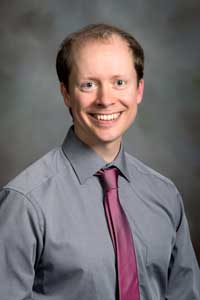
Challenger Mishra is a Bye Fellow in Computer Science at Queens' College, University of Cambridge. He serves as Director of Studies for first-year Computer Scientists and is a Research Fellow with the Accelerate Program for Scientific Discovery at the Computer Laboratory. Additionally, he is an affiliated lecturer co-teaching a course on Theory of Deep Learning.
Dr. Mishra's research sits at the intersection of Physics, Geometry, and Machine Learning. His current work focuses on special geometries that appear as extra-dimensions in Superstring theory and AI-driven mathematical discovery. His interdisciplinary approach combines theoretical physics with cutting-edge machine learning techniques to explore complex mathematical structures and their physical implications. His research spans both pure mathematics and applied computational methods, seeking to bridge the gap between abstract theory and practical applications in scientific discovery.
- Research in Calabi-Yau metrics and string theory
- Development of machine learning approaches for mathematical discovery
- Applications of AI in theoretical physics
- Exploration of geometrical structures in superstring theory
Among his notable achievements, Dr. Mishra was awarded the prestigious Rhodes Scholarship during his doctoral studies. This recognition highlights his exceptional academic abilities and research potential in theoretical physics.
As an educator, Dr. Mishra is passionate about inspiring the next generation of students and preparing them for future challenges. He provides supervisions for Computer Science students and plays a key role in shaping the curriculum for first-year Computer Scientists at Queens' College. His teaching philosophy emphasizes the connections between theoretical foundations and real-world applications, particularly in the rapidly evolving field of machine learning and artificial intelligence.
Dr. Mishra's work is closely associated with the Accelerate Program for Scientific Discovery, which likely provides him with resources and collaborative opportunities to advance his research at the intersection of physics, geometry, and machine learning.