معرفی
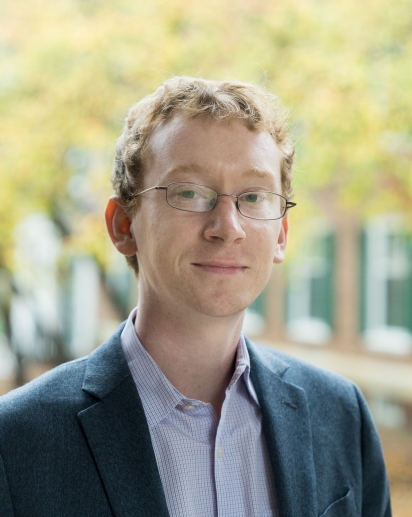
Chaim Braun is an affiliate and former consulting professor at the Center for International Security and Cooperation (CISAC), Stanford University. He specializes in nuclear power economics, fuel supply assurance, and nuclear nonproliferation, with a focus on regional implications in the Middle East, South Asia, and South America. He is actively engaged in research on nuclear security policy and the implications of nuclear energy expansion.
His research interests include nuclear nonproliferation, nuclear fuel cycle security, energy security, and safeguarding nuclear facilities. Braun pioneered the concept of proliferation rings related to the A.Q. Khan network and has worked extensively on nuclear fuel lease and take-back models. He also examines terrorist threats to nuclear power plants and research reactors, and has led studies on safeguarding the Agreed Framework in North Korea.
The recent publications reflect a consistent focus on nuclear policy and security in high-risk regions, especially North Korea and South Korea, with an emphasis on geopolitical stability, denuclearization challenges, and the balance between civilian nuclear energy and weapons proliferation.
- Member, World Nuclear Association (WNA) Committees on Nuclear Economics and Assured Fuel Supplies
- Permanent Lecturer, World Nuclear University (WNU) One-Week Courses
- Member, DOE Generation IV Roadmap Study Working Groups
Braun has conducted research for the Department of Energy (DOE), Energy Information Administration (EIA), Electric Power Research Institute (EPRI), Nuclear Energy Institute (NEI), and Non-Proliferation Trust International. Prior to CISAC, he worked at Bechtel Power Corporation, United Engineers and Constructors (UE&C), EPRI, and Brookhaven National Laboratory, leading studies on power plant performance and nuclear marketing in East Asia and Eastern Europe.
He is affiliated with CISAC’s research initiatives and has contributed to summer studies on nuclear power expansion and nonproliferation, including chairing a working group on the back-end of the nuclear fuel cycle.