معرفی
Carl Rodriguez is an Assistant Professor at the University of North Carolina at Chapel Hill, a position he has held since January 2023. Prior to this, he served as an Assistant Professor at Carnegie Mellon University from 2021 to 2023, following postdoctoral fellowships at MIT and Harvard. His academic journey includes a BA in Physics from Reed College (2010) and a PhD in Physics from Northwestern University (2016), where he worked under Fred Rasio on star cluster evolution and binary black hole formation.
Dr. Rodriguez’s research focuses on stellar dynamics, gravitational waves, and the astrophysical phenomena arising from dense star clusters. He investigates the evolution of star clusters, their role in producing binary black holes and gravitational wave sources, and the dynamics of compact objects such as black holes and neutron stars within these environments.
Recent research highlights include studies on tidal debris production in globular clusters, the contribution of massive star clusters to binary black hole mergers, and predictions for Gaia black hole discoveries using dynamical formation models. His work leverages advanced computational tools like Monte Carlo N-body simulations and the COSMIC code to model cluster evolution and gravitational wave sources.
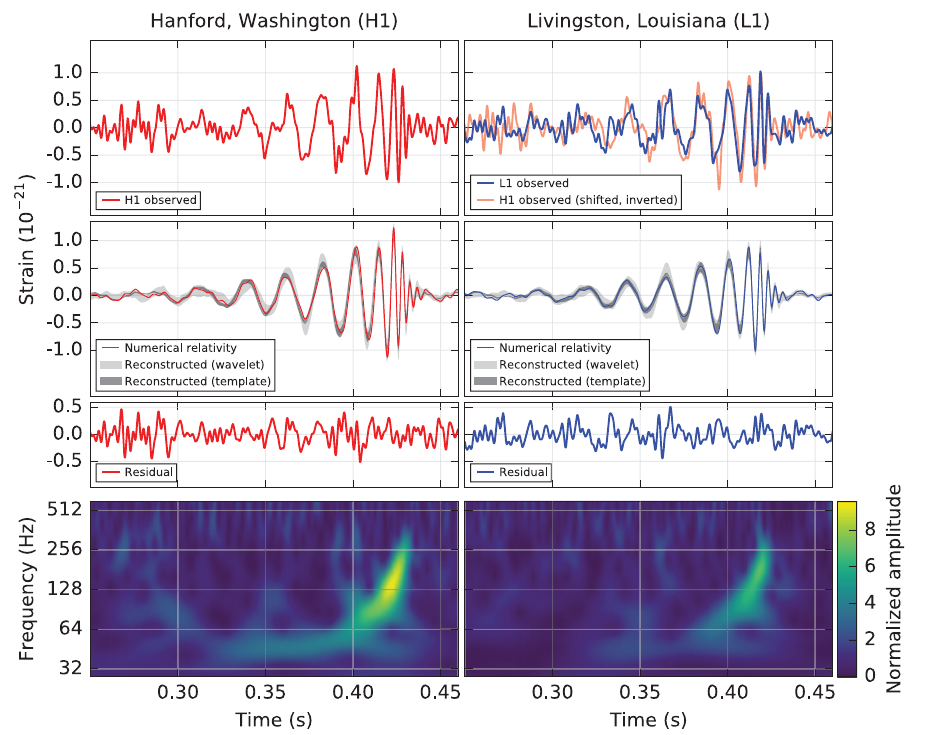
His publications span topics such as intermediate-mass black hole formation, the demographics of triple systems in star clusters, and the impact of stellar collisions on black hole populations. While no specific awards or grants are explicitly listed in the provided information, his contributions have advanced the theoretical framework for understanding gravitational wave events detected by LIGO and future observatories like DECIGO.
As the leader of the Rodriguez Group at UNC, he fosters collaborations and publishes extensively in astrophysics. His lab’s webpage (https://dynamics.unc.edu) showcases ongoing research projects and computational methodologies.