
معرفی
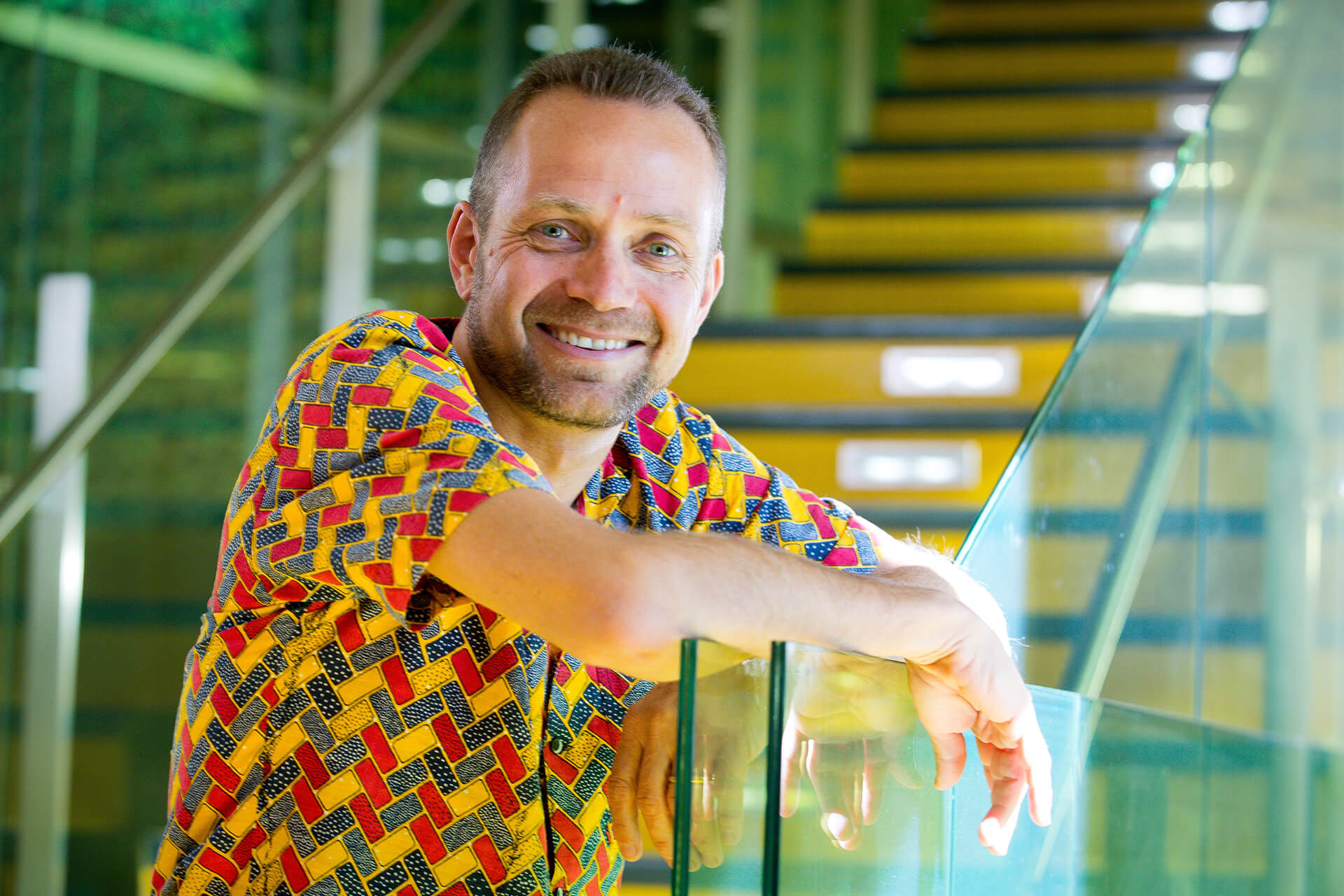
Professor Bruno van Swinderen is a Professorial Research Fellow and Group Leader at the Queensland Brain Institute, University of Queensland, within the Faculty of Health, Medicine and Behavioural Sciences. With over two decades of neuroscience research experience, he leads a laboratory focused on understanding the neural mechanisms of consciousness using Drosophila (fruit fly) as a model organism. His work bridges molecular, electrophysiological, and behavioral approaches to uncover fundamental principles of brain function related to awareness and consciousness.
Professor van Swinderen received his PhD in Evolutionary and Population Biology in 1998 from Washington University in St. Louis, Missouri. His graduate work focused on general anesthesia using Caenorhabditis elegans models, applying both quantitative genetics and molecular genetic approaches. He completed his postdoctoral training at The Neurosciences Institute (NSI) in San Diego, California (1999-2003), where he switched to Drosophila melanogaster to develop methods for studying perception. He established his independent laboratory at the Queensland Brain Institute in February 2008.
His research centers on understanding consciousness through three brain states where awareness is lost: selective attention, sleep, and general anesthesia. His laboratory uses Drosophila as a genetic model system to investigate visual perception across different arousal states, with particular focus on how sleep regulates selective attention and predictive processing. The lab employs novel visual paradigms within a Drosophila molecular genetics context, examining how neural circuits process information when consciousness is altered or diminished. A key insight from his work is that fundamental mechanisms of consciousness are conserved across species, challenging assumptions about the uniqueness of human consciousness. Professor van Swinderen has proposed that we dream to first become conscious as babies and then to stay conscious as adults, an adaptive hypothesis linked to predictive processing theory.
His recent publications reveal increasingly sophisticated methodologies including whole-brain electrophysiology, calcium imaging, and molecular analyses that have identified specific neural mechanisms underlying sleep homeostasis, anesthesia effects, and attention processes. A notable trend is the integration of computational approaches with traditional neuroscience techniques, allowing for nuanced analysis of complex brain activity patterns. His work demonstrates that flies exhibit surprisingly complex brain functions previously thought to be exclusive to higher organisms, with implications for understanding human consciousness and developing new approaches to anesthesia and sleep disorders.
Professor van Swinderen maintains an active research program with numerous collaborations, as evidenced by his extensive publication record. His laboratory continues to push methodological boundaries while maintaining focus on core questions about what makes a brain conscious, contributing significantly to our understanding of brain states where awareness is lost.
Bruno van Swinderen در سایتهای دیگر
جستوجوهای مرتبط
شاید اینها هم برایتان مناسب باشند
 Matthew Van De PollUniversity of Queensland · پژوهشگر ارشد
 Deniz ErtekinUniversity of Queensland · پژوهشگر ارشد
- LLiad MudrikMax Planck Institute for Empirical Aesthetics · پژوهشگر
 Leslie GriffithBrandeis University · استاد
 Yuri SaalmannUniversity of Wisconsin-Madison · استاد
 Jeffrey Michael DonleaUniversity of California, Los Angeles · دانشیار