معرفی
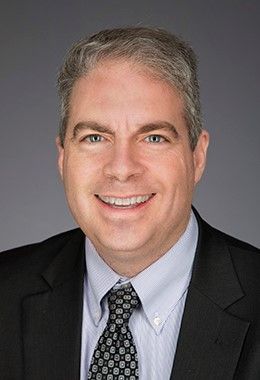
Bruce Goldstein is an Associate Professor in the Program in Environmental Design and the Environmental Studies Program at the University of Colorado Boulder, and a faculty research associate in the Institute for Behavioral Science. His work focuses on collaborative approaches to social-ecological challenges across multiple scales of governance and planning.
Dr. Goldstein earned his Ph.D. in 2004 from the University of California, Berkeley. His academic journey has centered on understanding how institutions and stakeholders navigate complex environmental challenges through collaborative processes.
Goldstein's research interests span social-ecological planning, collaborative governance, and resilience studies. He examines how planners, activists, and public agency managers develop collaborative responses to challenges such as rapid growth in the wildlands-urban interface, biodiversity protection, common-property resource management, and climate change. A particular focus of his work is understanding how learning networks can catalyze change in stable institutions that are approaching dramatic social and ecological thresholds. His research often explores the intersection of institutional theory, network dynamics, and sustainability transformations.
His recent scholarly output demonstrates a clear evolution toward sustainability transformations as a field of study, with numerous "State of the Field" analyses examining systems education, network leadership development, and financing systemic transformation. Goldstein's work bridges practical applications with theoretical frameworks, particularly in how collaborative networks navigate paradoxes and tensions during transformative processes. His publications reveal a consistent focus on the practical implementation of resilience thinking across diverse environmental contexts.
Goldstein has led significant research initiatives including a 6-year study of the U.S. Fire Learning Network, a novel multi-scalar collaborative approach to restoring disrupted fire regimes across jurisdictional boundaries. He is currently engaged with the Fire Adapted Communities Learning Network and the Locally-Managed Marine Areas Network. His influential edited book "Collaborative Resilience: Moving Through Crisis to Opportunity" (MIT Press 2011) examines how crises can serve as opportunities for collaboration, consensus building, and transformative resilience. While he is not currently accepting new graduate students, his past mentorship has contributed to the development of scholars in environmental design and resilience studies.