معرفی
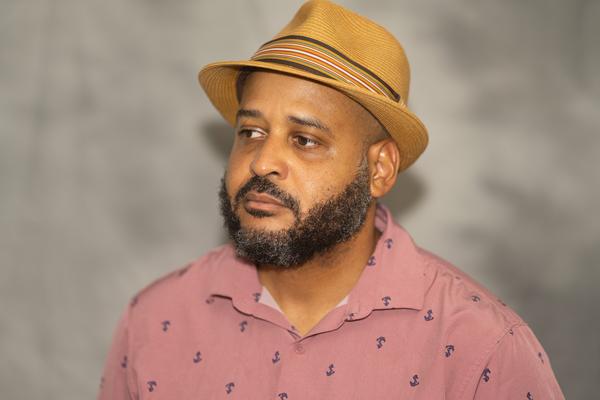
Brian Stephens is Assistant Professor of African American Studies at Ohio University’s College of Arts and Sciences, with joint appointments in the School of Interdisciplinary Arts (Chaddock + Morrow College of Fine Arts) and the School of Media Arts & Studies (Scripps College of Communication). His interdisciplinary scholarship bridges Black Studies, media, and performance art, rooted in critical race and queer theory.
Education:
- Ph.D. in Ethnic Studies, University of California, Riverside
- Master’s in African American Studies, University of California, Los Angeles
As a Black Studies scholar, Brian Stephens specializes in Black Camp—a cultural practice that reclaims Camp aesthetics through Black queer vernacular traditions. His research traces the African American artists who shaped Camp in the 20th and 21st centuries, challenging dominant narratives that overlook Black contributions. His upcoming work explores the Black queer origins of Punk Rock, further expanding the boundaries of Black cultural production.
His 2017 article on Kara Walker analyzes how Black Camp uses irony, exaggeration, and theatricality to confront racial trauma and subvert historical stereotypes. The publication reflects his broader interest in visual art, music, and cinematic expression as tools of cultural resistance.
Stephen’s academic work emerged from Ohio University’s Provost's IDEA (Inclusive, Diversity, Equity, and Accessibility) Initiative, underscoring his institutional role in advancing equity in higher education.
Teaching:
- AAS 2500: Blackness and the Arts
- AAS 3500: African American Arts and Artists
- AAS 3520: Blacks in Contemporary American Cinema
- AAS 3530: Survey of Black Independent Cinema
- AAS 3550: History of African American Music I (Slavery–1926)
- AAS 3560: History of African American Music II (1926–Present)
- AAS 3570: Black Music Criticism: Hip Hop history, culture and politics
Though no awards or students are listed, his interdisciplinary affiliations and research agenda suggest active engagement in collaborative and innovative scholarly networks. His work contributes significantly to the re-centering of Black queer voices in cultural theory and artistic practice.